
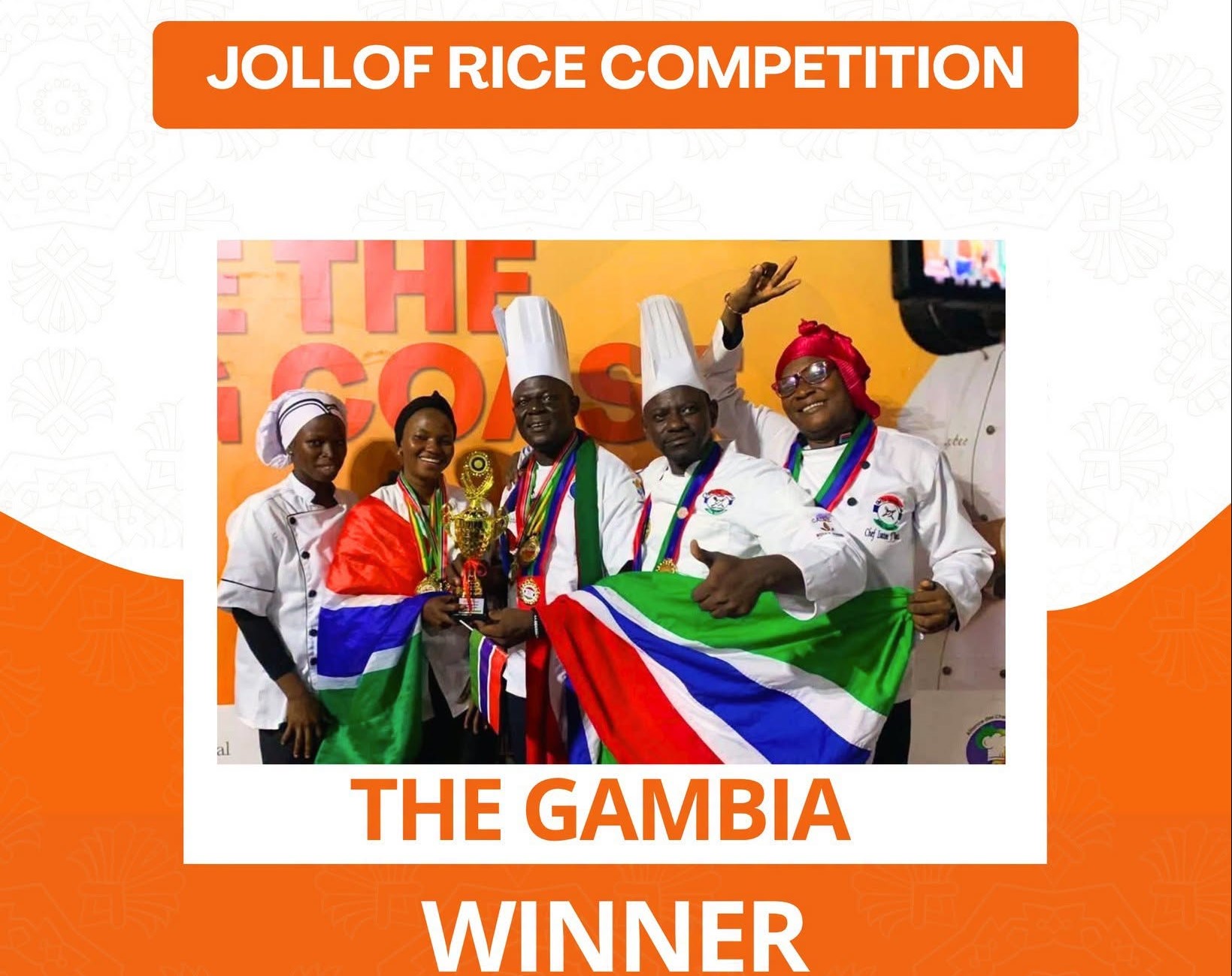

A second consecutive WAFFEST victory has forced West Africa to confront an uncomfortable possibility: perhaps the loudest country does not cook the best rice.
By Lamin S Jaiteh
The Republic of The Gambia has retained its title as West Africa’s jollof rice champion, triggering celebrations in Banjul, emergency meetings in Accra and what analysts expect to be several weeks of organised denial in Lagos.
Team Gambia successfully defended the crown at the 2026 West Africa Food Festival, held in Banjul from October 15 to 21. The team defeated rivals from across the subregion after winning the same title in Ghana last year.
The result means The Gambia is no longer merely participating in the great West African jollof debate. It is now standing in the middle of the argument, wearing the crown and asking everyone else to lower their voices.
Nigeria has reportedly rejected this request.
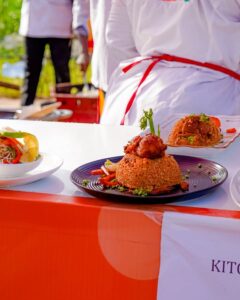
For decades, the jollof dispute operated according to a simple arrangement. Ghana and Nigeria argued loudly. Senegal occasionally reminded everyone where the dish came from. Sierra Leone and Liberia watched with the weary expressions of relatives at a family gathering. The Gambia, meanwhile, cooked.
This system worked perfectly until judges began tasting the food.
The Gambian victory is especially troublesome because it cannot be dismissed as a one-off accident, a confused palate or an administrative error involving scorecards. The country won the jollof category at WAFFEST 2025 in Accra, defeating teams that included Nigeria, Ghana and Sierra Leone. Chefs Haddy Nyang and Momodou Alpha Jallow earned gold medals for the winning dish, while team leader Chef Musa Darboe credited Gambian skill and tradition, as reported by The Guardian Nigeria.
Now The Gambia has done it again, this time at home.
Naturally, rival nations may raise concerns about home advantage. Gambian officials have denied that the judges were influenced by the smell of benechin drifting through Banjul, the warm hospitality of the Smiling Coast or the quiet knowledge that leaving the country after insulting its jollof would be socially awkward.
No evidence of wrongdoing has emerged. Apart from the final result, which many Nigerians consider suspicious by definition.
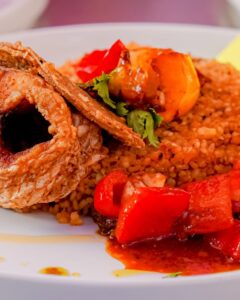
Nigeria Activates National Coping Mechanism
Within minutes of the announcement, Nigerian social media entered its traditional five-stage response to losing a jollof competition: disbelief, accusations, population statistics, unrelated references to Afrobeats and, finally, the declaration that competitions do not matter anyway.
Nigeria’s principal argument remains numerical. With more than 200 million citizens, the country insists it possesses enough people to form a statistically unbeatable number of opinions.
“Nigeria cannot lose jollof,” an imaginary spokesman explained. “Do you know how many of us there are?”
When informed that national population is not an ingredient, the spokesman accused the judges of disrespecting Africa’s largest market.
Nigeria had arrived in Banjul with considerable force. More than 40 Nigerian chefs, judges and officials travelled to the festival, according to the New Telegraph. This was apparently not enough to overcome The Gambia, a country whose entire population could fit inside Lagos and still spend three hours in traffic.
The defeat has raised difficult questions in Abuja. Should Nigeria send 80 chefs next year? Should the country establish a Federal Ministry of Jollof Affairs? Should contestants be allowed to enter with the smoky party jollof served at weddings, where wood fire, giant pots and mild chaos create flavours unavailable under controlled conditions?
A presidential committee will likely consider these issues before producing a 600-page report that contains no recipe.
Ghana Requests More Tomatoes and Another Chance
Ghana has responded with greater composure, which is to say its citizens are arguing in complete sentences.
Ghanaian jollof supporters continue to defend their use of basmati rice, rich tomato sauce and measured seasoning. Critics claim Ghanaian jollof is too polite, arriving on the plate as though it has an appointment at the British High Commission.
Ghanaians reject this characterisation. They argue that their jollof is refined, balanced and structurally sound. Nigerians counter that rice should not need a university degree to taste good.
Both countries now face the same humiliating fact: while they were debating grain length, The Gambia collected the trophy.
Losing in Banjul also creates a strategic problem for Ghana. The old rivalry depended on Ghana and Nigeria treating each other as the only serious contenders. Acknowledging The Gambia would require redrawing the map of jollof power. Worse, it might require listening to a smaller country.
West African diplomacy has survived coups, currency crises and border closures. It may not survive that.
Senegal Claims Intellectual Property
Senegal, for its part, is expected to respond to the Gambian victory by producing historical documents.
The Senegalese position is not that their jollof is better. It is that everybody else is eating a translated version of ceebu jën and refusing to cite the original author.
Historians commonly trace jollof’s roots to the Wolof people and the old Jolof sphere in the Senegambia region. The dish then spread across West Africa, developing distinct national forms along the way. The Point has likewise linked its origins to the historic Senegambia region associated with the Jolof or Wolof Empire.
This creates an interesting family dispute. Senegal can claim ancestry. The Gambia can claim the current trophy. Nigeria can claim volume. Ghana can claim that Nigerians use too much oil.
Everybody wins, except at the actual competition.
Senegal may now petition the African Union to classify jollof as protected Senegambian intellectual property. Under the proposal, every pot cooked outside Senegal and The Gambia would carry a label reading: “Based on an original concept from Senegambia. Local modifications may include excessive tomato paste.”
Nigeria is expected to ignore the ruling.
The Small Country Problem
The Gambia’s victory carries wider implications for Africa because it attacks one of the continent’s most dependable political assumptions: size equals importance.
The Gambia is mainland Africa’s smallest country. On a map it looks as though Senegal began eating a banana and stopped halfway. Yet this narrow strip along the River Gambia has now beaten nations with vastly larger populations, economies and online armies.
That is dangerous.
If The Gambia can dominate jollof, Rwanda may demand continental control of coffee. Lesotho could become the final authority on blankets. Eswatini might win something nobody knew it had entered. Cabo Verde may simply release another song and remind the mainland that population is no substitute for rhythm.
Large African states should be worried. For years, they have relied on scale, confidence and the assumption that nobody would inspect the details. The Gambian chefs have introduced a destructive new principle: competence.
Today it is jollof. Tomorrow, small states may begin submitting audited results in football, governance or electricity supply.
This must be contained.
A Victory for Regional Unity, Unfortunately
WAFFEST describes itself as a platform for showcasing culinary skill, sharing knowledge and strengthening ties across West Africa. The 2026 festival drew hundreds of delegates and more than 30 international chefs and culinary professionals, according to Gambiana.
This language of cooperation is admirable. It is also clearly incompatible with jollof.
Jollof does not strengthen regional unity. Jollof reveals how thin that unity was to begin with. ECOWAS may issue statements about free movement and integration, but place one pot of rice in the room and every border reappears.
Still, the argument has value. West Africans who disagree about elections, currencies and football can at least agree that outsiders should stay out of the matter.
An American may call it “spicy rice.” A British chef may add raisins. A European restaurant may serve six grains beside grilled chicken and charge €24.
At that moment, Nigeria, Ghana, Senegal, Sierra Leone, Liberia and The Gambia will unite with military precision. Old disputes will vanish. Diplomatic relations will be restored. A joint intervention force will be assembled before dessert.
That is the true power of jollof: not that it brings West Africans together, but that it gives them a common enemy whenever somebody adds peas.
The Crown Comes Home
For The Gambia, retaining the title is more than a culinary victory. It strengthens the country’s reputation as a destination for food, culture and tourism. Gambian chefs also have a record beyond this latest win: they claimed the WAFFEST jollof title in Lagos in 2023, while earlier Gambian competitors earned awards for Best Chef and Best Dessert in 2019, according to The Point.
At some stage, rivals will have to stop calling this luck.
The Gambia is not sneaking into competitions and escaping with unattended trophies. Its chefs are arriving, cooking and winning while larger countries conduct press conferences about why they should have won.
Perhaps that is the secret. Gambian jollof does not come burdened by the need to represent 200 million opinions. It does not have to settle a Twitter argument before the onions are chopped. It simply has to taste good.
So what does The Gambia’s retained crown mean for the rest of Africa? It means Nigeria must learn that confidence is not a seasoning. It means Ghana must accept that presentation cannot negotiate with a judge’s tongue. It means Senegal should keep the historical receipts nearby.
And it means the continent must get used to an unsettling new order in which the smallest country in mainland Africa holds West Africa’s most emotionally significant crown.
The debate will continue, of course. Facts have never posed a serious threat to a jollof argument.
But until another nation defeats The Gambia in the kitchen, the official position is clear: Nigeria has the numbers. Ghana has the grammar. Senegal has the origin story. The Gambia has the trophy.