
New international role could help turn years of community work into a national system for families seeking answers about relatives lost on the “Back Way”.
By Lamin S Jaiteh
The Gambia is entering a critical new phase in efforts to address one of the most painful consequences of irregular migration: the disappearance of people travelling along dangerous routes towards Europe.
Beginning on 1 October 2026, The Gambia will serve alongside Switzerland as non-permanent co-chair of the Global Alliance for the Missing for a two-year term. The appointment gives the country an opportunity to push the plight of missing migrants—and the families who search for them—higher on the international humanitarian agenda.
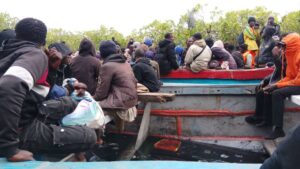
For many Gambian families, a relative’s disappearance on the journey commonly known as the “Back Way” is not simply a migration statistic. It is a mother waiting for a telephone call that may never come, a father searching through photographs and old messages, and a family unable to decide whether to keep hoping, begin grieving or continue searching.
Their uncertainty can last for years. Addressing it requires more than sympathy. It demands a coordinated system capable of documenting cases, protecting sensitive information and connecting families with institutions that may be able to help establish what happened.
The Gambia is not starting from scratch.

In recent years, the African Migration Advisory Centre (AMAC) has worked to develop a framework for documenting missing Gambian migrants and supporting the relatives they left behind. The organisation has emerged as a principal civil society coordinator in the effort, establishing partnerships with local authorities, national institutions and international experts.
Yet the search for missing migrants cannot belong to one organisation. Its success will depend on a network that includes affected families, grassroots groups, civil society organisations, municipal authorities, national agencies and international missing-persons specialists.
Building a bridge between families and institutions
AMAC’s central role has been to connect families with institutions capable of helping them seek answers.
Its missing-migrants framework focuses on identifying and documenting Gambians who disappeared while travelling towards Europe. Much of the information comes directly from relatives, including parents searching for children whose whereabouts remain unknown.
The aim is not simply to compile a list of names. It is to create a responsible humanitarian pathway through which information can be collected, assessed and protected. Where consent has been obtained and legal requirements are met, relevant information could then be shared with competent missing-persons institutions.
That distinction is important. Any national response must protect families from exploitation and ensure that deeply personal information is handled confidentially.
Grassroots organisations remain essential
Formal agreements can establish a system, but the search often begins within families and communities.
Grassroots organisations are usually among the first to learn that a young person has left home, that communication has stopped or that relatives have begun searching. Their local knowledge and trusted relationships make them essential to any national framework.
Safe Home, the Ebrima Migrants Situation Foundation and other community-based organisations have important roles to play in reaching affected households and keeping families’ voices at the centre of the process. 
The strength of the emerging framework lies in the different capabilities each partner brings. AMAC can provide coordination and links to institutions. Grassroots groups can offer community access, local knowledge and direct family engagement. Government agencies can exercise statutory authority, while international organisations can contribute specialist skills, standards and identification mechanisms.
No single organisation can perform all these functions alone.
KMC offers a local entry point
One important step has been AMAC’s memorandum of understanding with the Kanifing Municipal Council.
The agreement provides a local government platform through which engagement with families can be organised at community level. KMC is expected to offer a municipal entry point and help facilitate the appropriate collection of ante-mortem information—details recorded before a person’s death or disappearance that could later assist identification.
Such information may include photographs, physical descriptions, dental records, medical history and other personal details known to relatives.
A municipal pathway could make the process more accessible while ensuring that information is collected consistently and handled responsibly.
National agencies join the effort
AMAC has also signed a memorandum of understanding with the Gambia Immigration Department, creating a direct connection with a national institution responsible for migration and cross-border movement.
The arrangement is not intended to replace the Government’s duties. Rather, it provides a mechanism through which civil society, families and state institutions can cooperate where their responsibilities overlap.
The National Agency Against Trafficking in Persons also forms part of the developing structure. Some missing-migrant cases may involve trafficking, exploitation or other protection concerns, making NAATIP’s specialised role particularly relevant.
Effective cooperation will require clear responsibilities. Immigration authorities, anti-trafficking agencies, municipal councils and civil society groups have different mandates. The task is to build referral pathways that allow them to work together without duplicating one another’s functions.
Partnership connects Gambia to international expertise
A major development came on 15 July 2025, when AMAC signed a Data Partnership Agreement with the International Commission on Missing Persons in The Hague. The agreement followed a sustained period of engagement involving AMAC, the commission and relevant Gambian authorities.
The partnership matters because the search for missing migrants often crosses several jurisdictions. A person may leave The Gambia, travel through multiple countries and disappear at sea, in the desert, at a border or in a detention facility. Resolving such cases may require family information to be compared with professional identification records held elsewhere.
Subject to consent, legal requirements and data-protection safeguards, the agreement provides an established international channel through which appropriate information may be handled in cooperation with the commission.
It is not intended to create a public database of missing Gambians. Its purpose is to offer a secure humanitarian pathway for families exercising their right to seek answers.
The developing chain begins with families and community organisations. It then connects to AMAC, KMC and national agencies such as the Immigration Department and NAATIP before reaching international missing-persons mechanisms.
Each link serves a different purpose. Advanced identification systems are of little use if information from families never reaches them. At the same time, community organisations cannot independently provide the forensic, legal and cross-border tools needed for professional identification.
A coordinated national system can bridge that gap. 
Co-chairmanship brings responsibility
The Gambia’s co-chairmanship of the Global Alliance for the Missing provides a chance to connect international commitments with work already taking place in Gambian communities.
Instead of starting with another policy paper, the country can build on an emerging structure linking families, grassroots groups, civil society, local government, national agencies and international expertise.
It can also ensure that affected families shape the agenda rather than remaining passive subjects of it.
The experiences of Gambian households could contribute to a broader understanding of the human cost of irregular migration. When one person disappears, a family lives with uncertainty. When hundreds disappear, communities carry that burden. When thousands vanish across migration routes, it becomes an international humanitarian crisis.
Every missing person has a name, and every name represents a family that deserves to search for the truth with dignity.
Cooperation must take priority
As the framework develops, organisations will need to resist competition over recognition and ownership.
AMAC’s agreements and international partnerships provide an important coordinating foundation, but the organisation’s effectiveness will depend on the strength of the wider network.
Safe Home, the Ebrima Migrants Situation Foundation and other community actors can help reach families. KMC can provide local government access. The Immigration Department can contribute migration-management expertise. NAATIP can address protection and trafficking concerns. Lambai Communication can help provide media and communication support to disseminate information. The International Commission on Missing Persons can provide technical and international support.
Families, meanwhile, hold the photographs, memories and personal details at the heart of every case. Without their trust and participation, no system can succeed.
The goal should be to move from a situation in which relatives are left asking, “Where is my child?” to one in which there is a recognised, confidential and humane process for seeking answers.
That process may begin in a Gambian home—with a mother, a father, a photograph and a name. From there, it must connect to a network willing to ensure that missing migrants do not simply disappear from the public record.
The Gambia’s two-year co-chairmanship can become more than a diplomatic responsibility. It can provide the momentum to build a practical model connecting grassroots action, state institutions and international humanitarian expertise.
The foundations are taking shape. The next task is to bring the partners together, clarify their roles, strengthen safeguards and place families firmly at the centre of the national response.