
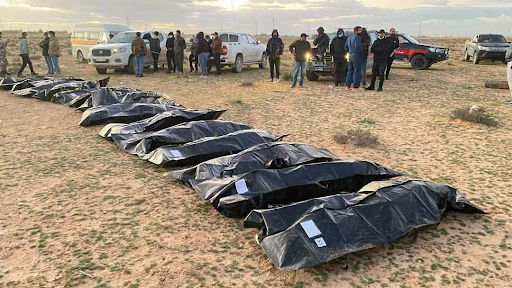

At least 21 refugees and migrants from various African countries have been discovered in mass graves near Ajdabiya, eastern Libya, according to the group Refugees In Libya.
Survivors say the victims suffered detention, brutal abuse and execution-style killings.
The discovery has triggered urgent calls for international action, with human rights advocates demanding that those responsible be sent to the International Criminal Court (ICC) to face charges for crimes against humanity.
Testimonies collected by activist David Yambio’s organisation paint a grim picture: both men and women were locked up, beaten, and ultimately shot dead.
Libyan authorities have confirmed the arrest of a local man with a criminal history, reportedly apprehended during a raid by the Internal Security Agency’s Ajdabiya branch. The raid took place on a farm where several migrants were being held in squalid conditions for ransom.
Human rights groups warn that keeping the suspect in domestic custody risks undermining the investigation and puts witnesses in danger. They’re pushing for the suspect’s transfer out of Libya and for international oversight.
Activists are urging the ICC to intervene, arguing that an independent, international process is the only way to ensure real accountability.
Groups like Refugees In Libya emphasize that these killings are part of a much broader pattern—one in which migrants are routinely intercepted, detained, and abandoned in Libya after being denied safe passage.
Critics point to European Union (EU) border policies as fueling this crisis. They say the EU has created the conditions for these abuses to happen again and again by funding proxy forces, supporting migrant containment and blocking access to asylum.
Refugees In Libya is calling for a full investigation into the role of EU officials and institutions, accusing them of complicity in policies that leave vulnerable people open to torture, disappearance, and death.
“This isn’t migration ‘management,’” the group said. “It’s systemic, preventable violence.”
So far, the ICC hasn’t commented on whether it will take up the case. The Court’s jurisdiction over Libya stems from a 2011 UN Security Council referral linked to crimes during the civil war.
Since the fall of Muammar Gaddafi in 2011, Libya has remained unstable and divided among rival factions. The country has become a major gateway for refugees and migrants trying to reach Europe by sea, with thousands locked up in dire conditions.
The mass graves in Ajdabiya are the latest evidence of the widespread abuse faced by migrants and refugees trapped in Libya’s detention system.