
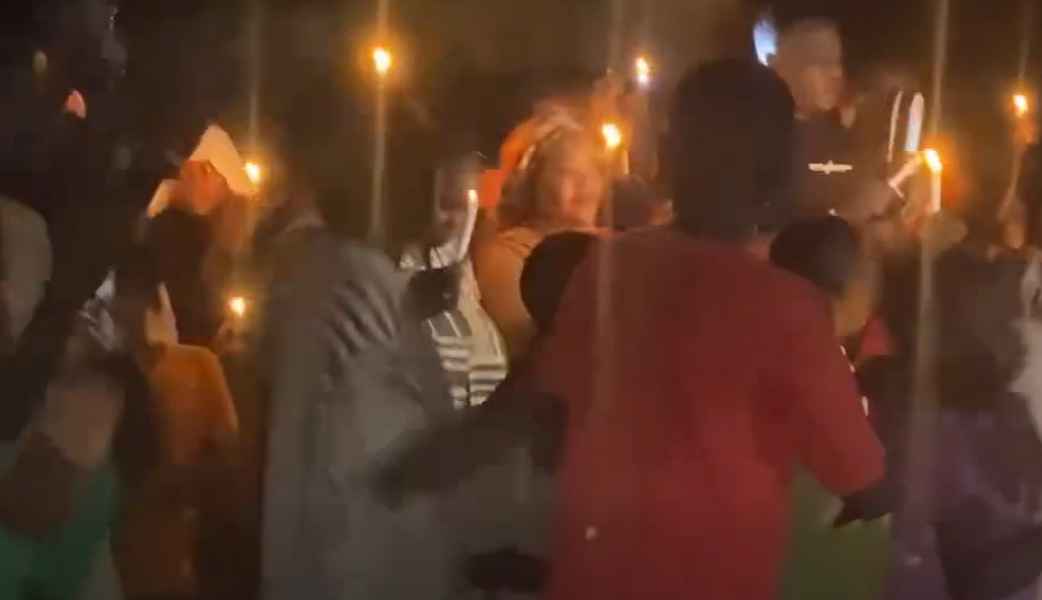

On the cracked asphalt of Buckle Street in Banjul last night, hundreds of angry voices echoed through the capital. Candlelight flickered in doorways and cell phones lit up the crowd as protesters demanded one thing: an end to The Gambia’s relentless electricity blackouts. Their chants grew louder as the hours passed, with many calling for President Adama Barrow to resign ahead of the high-stakes general elections set for December 5th.
A Nation in the Dark
This is no isolated outburst. For months, power cuts have defined daily life across The Gambia. According to a World Bank enterprise survey of The Gambia, a staggering 87% of businesses report suffering from outages—sometimes as many as eight times a month—crippling shops, clinics, and schools alike. Even the National Assembly has been plunged into darkness mid-session, a symbol of just how deep the crisis runs.
For many, the figures are personal. Fatou Jatta, who sells cold local drinks from a kiosk in Serrekunda, said, “Last week, I threw out two coolers of spoiled juice. That’s my profit—gone. When the power goes, so does my business.”
NAWEC Under Fire
At the heart of the storm is the National Water and Electricity Company (NAWEC). The state utility company has pointed to technical failures and surging demand as the root causes, while government officials repeatedly promise that relief is coming. But on the ground, patience is running out. Last night’s protest in Banjul was just the latest in a string of public demonstrations, with similar scenes, though smaller in size, unfolding in Brikama and Bundung over the past few months.
Alhaji Sowe, a retired teacher who joined the demonstration, didn’t mince words: “We hear the excuses every day. We hear about fuel shortages, broken generators. But the lights never come back on. Someone needs to take responsibility.”
Political Fallout for the NPP
With elections looming, the crisis has become a political powder keg. The ruling National People’s Party (NPP) and President Barrow have made big promises over the years—Barrow himself boasting that access to electricity has doubled since he took office, from 35% in 2017 to over 65% today. Yet, for many Gambians, these gains mean little in the face of daily blackouts.
Opposition parties are seizing the moment, holding rallies and urging voters to hold the NPP accountable. The Mayor of the Kanifing Municipality, Talib Bensouda, who is also the leader of the newly formed opposition group Coalition 2026, addressing a political rally in Brikama on Sunday 6th September 2026, characterised President Barrow as “Blackout Barrow.” Mayor Bensouda promised to address the national electricity company’s problem by opening it up for private investment.
Former NPP insiders have warned that public anger over the outages could tip the scales in December. “People are growing frustrated with the constant power outages! If the government doesn’t solve this soon, it will be a deciding issue at the polls,” said Fanding Baldeh, a former party official.
The Human Toll
The effects ripple far beyond politics. Schoolchildren squint over their books under candle lights to finish their homework. Hospitals scramble for fuel to keep generators running. Small businesses, the backbone of Gambia’s economy, are bleeding cash.
Mariama Ceesay, a nurse at a private clinic in Banjul, described nights when the lights went out mid-procedure. “We rely on backup generators, but they’re old, and sometimes they fail. It’s terrifying when you’re caring for a patient, and suddenly you can’t see.”
Government Response: Promises and Protests
President Barrow, for his part, has urged calm and called for dialogue, promising new investments in power generation and regional partnerships to boost supply. But as the protests swell and social media fills with stories of hardship, hope is running thin.
“I don’t want to hear another promise,” said protester Lamin Sanyang. “We want action. We want light.”
This article is part of the Senegambia Observer’s ongoing coverage of the 2026 general election and the electricity crisis gripping the nation.