
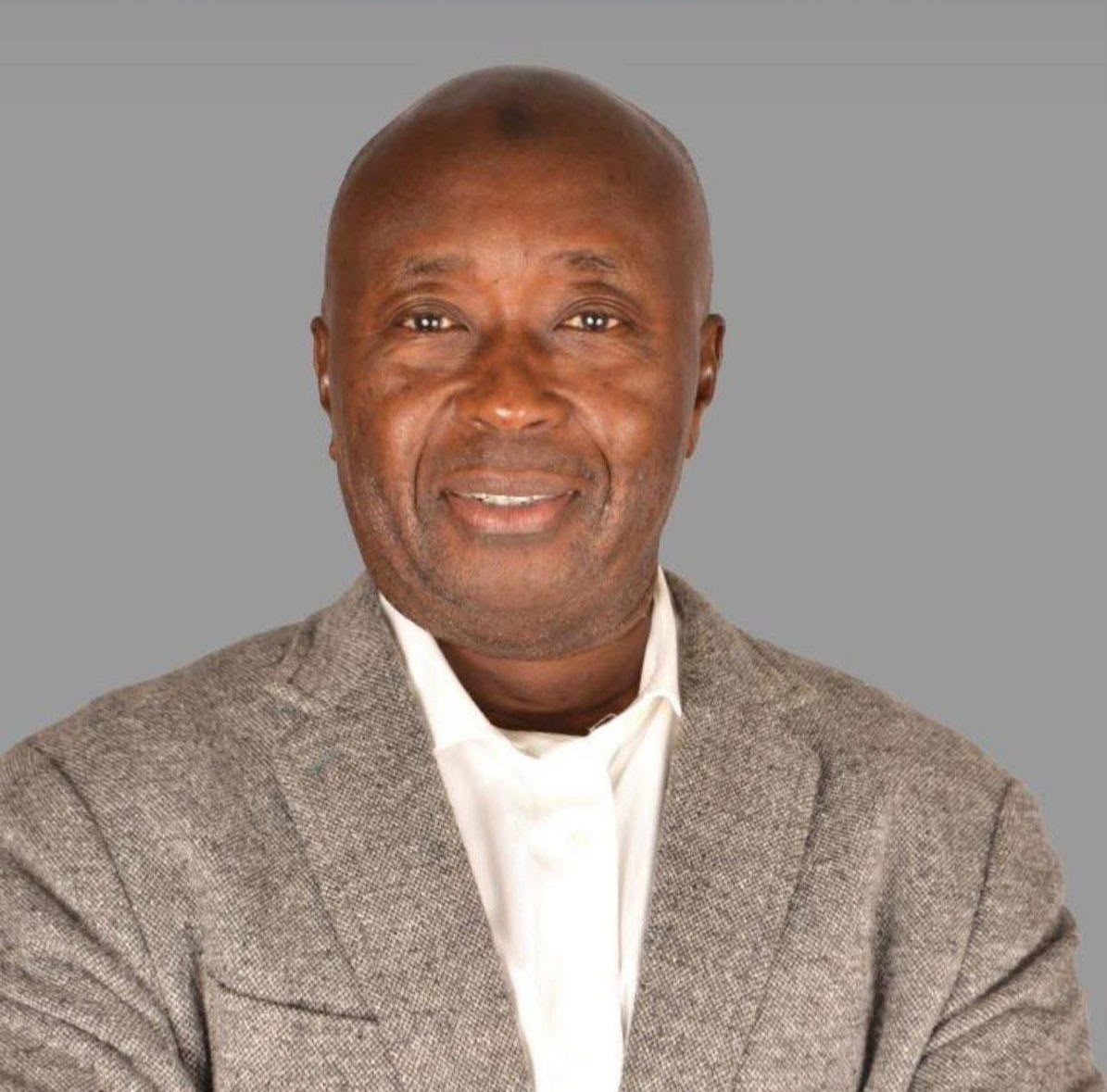

By Musa Bassadi Jawara
September 23, 2026
HALIFA, SEDIA AND TEAM GAMBIA GRAND COALITION: STOP THIS NONSENSE AND IDIOTIC CAMPAIGN THAT BRINGS NOTHING BUT MYSTERY AND NATIONAL HUMILIATION — THE ECONOMY IS IN THE DOLDRUMS, GAMBIANS HAVE NEVER ENDURED SUCH HARDSHIP, WHERE IS YOUR OUTRAGE?
An Economic Guide with Statistics for the Gambian Voter — December 5.
When Sir Dawda Kairaba Jawara led The Gambia from 1965 to 1994, this nation was Africa’s textbook case. From 1964 to 1978, real growth averaged 7% — our highest per capita growth ever recorded. Government revenue averaged 21% of GDP, investment 32% of GDP. We were one of the few African countries to graduate from IMF balance-of-payments support because our books were clean. The Dalasi held firm. When Jawara left on July 22, 1994, after the military takeover that ended the First Republic, one US dollar was D9.30.
Today, September 23, 2026, one US dollar is D74.29. The euro is D84.96, the pound D99.00. That is a 700% depreciation in 32 years.
THE JAWARA LEGACY AND POSTHUMOUS VINDICATION
Jawara, yes, he stayed for too long, but his economic and social agenda was the best this country has ever known and was on track for a better Gambia — if it were not for sick, hungry, clueless criminals who ended up as murderous, kleptocratic predators. Jawara’s human development and permanent people agenda was on a global pedestal. He built schools, not palaces. He built clinics, not torture chambers. He borrowed to plant groundnuts and educate children, not to import generators for darkness. The World Bank cited us, the IMF trusted us, tourists flooded us, because we were a nation that worked.
And who ran this model? The finest civil service Africa ever saw.
The Gambia under Jawara had the best civil service in Africa. It was led by giants: Eric Christensen, Jawara’s first Secretary General and Head of the Civil Service, the powerful technocrat who prepared the ground for Jawara’s historic 1975 visit to Peking (now Beijing) to meet Chairman Mao; Francis L. Mboge, his successor as second Secretary General, a byword for discipline and probity; and Dr. J. A. Langley, the intellectual engine in research, policy and diplomacy who accompanied Jawara as senior civil servant to China.
These men were not tribal chiefs. They were meritocrats. Under them, Banjul became a classroom for Africa. Governments from Sierra Leone, Ghana, Liberia and Botswana sent their officials and civil service corps to Banjul to observe, learn and adopt new techniques of proficiency and managerial skills — public financial management, budget discipline, permanent secretary system — to export to their respective capitals. That is why the IMF trusted us and graduated us from balance-of-payments support.
We lost that mojo. When guns replaced books, that civil service was purged, humiliated and scattered. It will take generations to recover. Jawara’s vindication today is not just economic — D9.30 to D74.29 proves that — it is institutional. He left us institutions that Africa copied. His successors left us institutions Africa pities.
And who fought him? Not on economics. Not on dogma. Not on ideological treatise. Team Gambia Grand Coalition’s greyed leadership fought Jawara not on policy, but squarely on personal vendetta, with calculated hate, vile and cruelty, weaponized on ETHNICITY AND TRIBE. They could not beat his numbers, so they tried to burn his name. For nearly half a century in opposition — grey hair now, walking sticks soon — they have offered the nation nothing but bitterness dressed as socialism.
THE 32-YEAR DALASI COLLAPSE: D9.30 (1994) TO D74.29 (2026) — A VERDICT, NOT VOLATILITY
This is not a chart. This is a post-mortem of a currency murdered by indiscipline. From D9.30 in 1994 to D74.29 in 2026 is not market fluctuation; it is a 700% collapse, a systematic destruction of purchasing power. Every bag of rice, every litre of fuel, every spare part, every bag of cement is imported in dollars. When the Dalasi dies, the market woman in Serekunda, the farmer in Kerewan, the fisherman in Tanji pays with hunger. The Dalasi did not fall by accident. It was pushed — by 32 years of borrowing to consume, not to produce; by central banks printing to cover deficits; by finance ministers signing T-Bills at 17% while factories closed. A currency reflects confidence. D74.29 reflects zero confidence in the stewardship of this nation.
On September 21, 2026, Finance Minister Seedy Keita confirmed before the National Assembly the second verdict. In just six months of 2026, the government paid GMD 3.10 billion in debt interest alone — GMD 2.50 billion domestic (+17%) and GMD 600 million external (+21%). That is an 18% jump year-on-year, representing 45% of the annual budgeted amount for debt interest. He admitted the gross deficit was “significantly driven by fiscal pressures emanating from domestic debt service.” This is interest only. Not principal. Just to stand still.
THREE PRESIDENTS, THREE LEGACIES: FROM PRUDENCE TO PLUNDER TO PERIL — FROM D15 BILLION SUSTAINABILITY TO D136.2 BILLION INSOLVENCY, AND THE BARROW ACCELERATION INTO THE ABYSS
At the time of the 1994 military takeover, total public debt was sustainable at roughly D15 billion equivalent. By February 2017, at the fall of the Second Republic, Finance Minister Amadou Sanneh revealed a total debt stock of D48.3 billion (D20.3 billion external + D28 billion domestic) — 120% of GDP.
Barrow inherited D56.5 billion in 2017. By December 2022, it was D90.7 billion. Today, domestic debt alone is D52.91 billion, of which only D10 billion is legacy Jammeh debt — 19%. The remaining 81% is new borrowing under Barrow. Total public debt now stands at $2.115 billion, 82.1% of GDP (IMF 2026), with government projections of D136.2 billion by December. That is not debt. That is intergenerational theft.
And what is the Barrow Acceleration? From D48.5 at Jammeh’s exit to D74.29 today is a 53% depreciation in nine years — faster than the 22 years of Jammeh combined. The Central Bank raised rates to 17% to fight 17% inflation in 2023, choking the private sector, now cut to 14% with little relief. Forecasts see D76.79 within a year, D89 within five. Inflation averaged 17% in 2023, 11.6% in 2024, and 7% in July 2026 — Food 5.8%, Transport 16.5%. Growth is 6% on paper, projected at 5.1% in 2026. World Bank unemployment at 4.1% hides underemployment; Heritage scores us at 6.5% with “low labour force participation.” Youth are on the backway, not in factories. Income poverty stands at 70%. This is acceleration into the abyss — more borrowing, less production, deeper misery.
THE GOSPEL AND THE BRUTAL TRUTH: A NATION IN THE GRAVEYARD
President Adama Barrow: Stop bragging and beating your chest. Your record in office is abominable.
President Barrow, given this proviso and background — from all available economic indices, statistics and measures — your economic record from debt accumulation, murder rate and insecurity, deepening poverty, destitution, financial distress, corruption, electricity crisis, healthcare collapse, education decay and human development measurement — your administration compared to the previous ones is more catastrophic, more ruinous, more reckless, more profligate, more calamitous, more dishonest, more incompetent, more predatory, more wasteful and more anti-people than anything this country has ever endured.
For clarity for the ordinary Gambian who does not follow economics: D9.30 exchange rate to the dollar means in 1994, when Jawara left, you needed only Nine Dalasis and Thirty Bututs to buy one US dollar. Your salary bought rice, fish, school fees. Today at D74.29, you need Seventy-Four Dalasis to buy that same one dollar — your salary buys nothing. That is your purchasing power cremated. D48.3 billion debt means total public debt — what government owes to both foreigners (external — World Bank, IMF, China) and to locals (domestic — T-Bills at Gambian banks) — that Amadou Sanneh met in 2017 at Jammeh’s fall. It was 120% of all we produce as a nation (GDP). Today you have taken that D48.3 billion to a projected D136.2 billion by December 2026 — $2.115 billion, 82.1% of GDP. You borrowed more in 9 years than Jawara and Jammeh combined in 52 years, yet Gambians are darker, poorer, hungrier, sicker and more desperate. Where are the factories? Where are the jobs? Where is the light? This is not development. This is de-development on steroids.
There was no handover in 1994. It was a military takeover — a gun put to the Constitution, after which the economy that Jawara left at D9.30 to the dollar was looted into D48.5. And there was no miracle recovery in 2017. What we have witnessed since is not co-adaptation for survival; it is co-adaptation for bankruptcy. The numbers prove it: D48.3 billion at Jammeh’s fall, D136.2 billion today, D52.91 billion domestic alone, D74.29 to the dollar. This is not management. This is a graveyard.
For academic restraint, we cite NAWEC’s debt to SENELEC and Karpowership at $40 million — a figure we know to be far more when the back-door letters of comfort, the sovereign guarantees signed at midnight, the Karpowership invoices hidden off-budget, and the SENELEC arrears rolled into diplomatic pleas are fully accounted for. Even at $40 million, it is a scandal: a utility that cannot keep lights on owes a foreign power more than the entire health budget.
So the question that history will ask is not about Barrow alone. Where was Halifa Sallah, where was Sedia Jatta, where was Team Gambia Grand Coalition, when all this was taking place? When the T-Bills were being rolled at 17%, when domestic debt was compounding at 18% in six months, when D3.10 billion in interest was paid just to stand still, when the Dalasi was being buried from D48.5 to D74.29 — where was your outrage? You watched in silence, and now you dare to embark on a campaign to ask for a country that is already in the graveyard.
It is a national tragedy, and you must be ashamed of yourself. The Gambian people have never endured such hardship — not under colonialism, not under the First Republic, not under the Second. Seventy percent in poverty, youth on the backway, women skipping meals so children eat, and you bring them a grand coalition of mystery and national humiliation. Stop this nonsense. Stop this idiotic campaign.
CONCLUSION
All in all, it is up to the Gambian people to chart their own course. My mission and objective in this essay is to delineate, outline and state in unambiguous terms the issues, the facts and the truth for the people and for citizens as they choose their President who will be in charge of the stewardship of the nation in the next five years. As Thomas Jefferson said, the people deserve the government they elect. The Gambian politician has left much to be desired. Personal interest reigns supreme above national interest. But history will not be kind to them. They are a total disappointment and the Gambian people deserve better.
The choice on December 5 is for the citizens and the diaspora — despite they are not eligible to vote, their influence at home is monumental. Do not be bamboozled into sycophancy and lies! Accountability, character, truthfulness and honesty must be held above everything in the collective decision we make as we chart a new direction for our country in December! It is time to reclaim the country to a pathway of decency, progress, human development, eradication of poverty and its concomitant ills, and advancement of civilization.
Musa Bassadi Jawara
Economist & Author
Bintou’s Point, Kerewan
Wednesday, September 23, 2026