

By Sanna Camara
The federal prosecutor in the appeal case of Ousman Sonko in Switzerland has strongly argued that sexual violence against people of all genders was systematically used as a tool of oppression by the Gambian state during Yahya Jammeh’s rule.
Prosecutor Sabrina Beyeler, drawing on a six-year investigation by the Swiss Attorney General’s Office, contends that sexual violence in The Gambia was not random or isolated.
Instead, she asserts, the regime wielded it as collective punishment, targeting those perceived as opponents and using it to enforce widespread repression throughout Jammeh’s presidency.
She rejected the idea that Ousman Sonko—Jammeh’s most trusted security official could plausibly claim ignorance of these crimes, emphasising that such a denial does not stand up to the evidence.
Sonko faces multiple counts of intentional homicide, torture, false imprisonment/illegal detention, deprivation of liberty, and acts of torture against demonstrators in 2016, as well as the killing of a perceived political opponent in 2000.
- Ousman Sonko’s Woes Persist as He Appeals Crimes Against Humanity Conviction in Switzerland
- Ex-Gambian Minister Appeals Crimes Against Humanity Conviction in Swiss Court
- Ousman Sonko gets maximum punishment
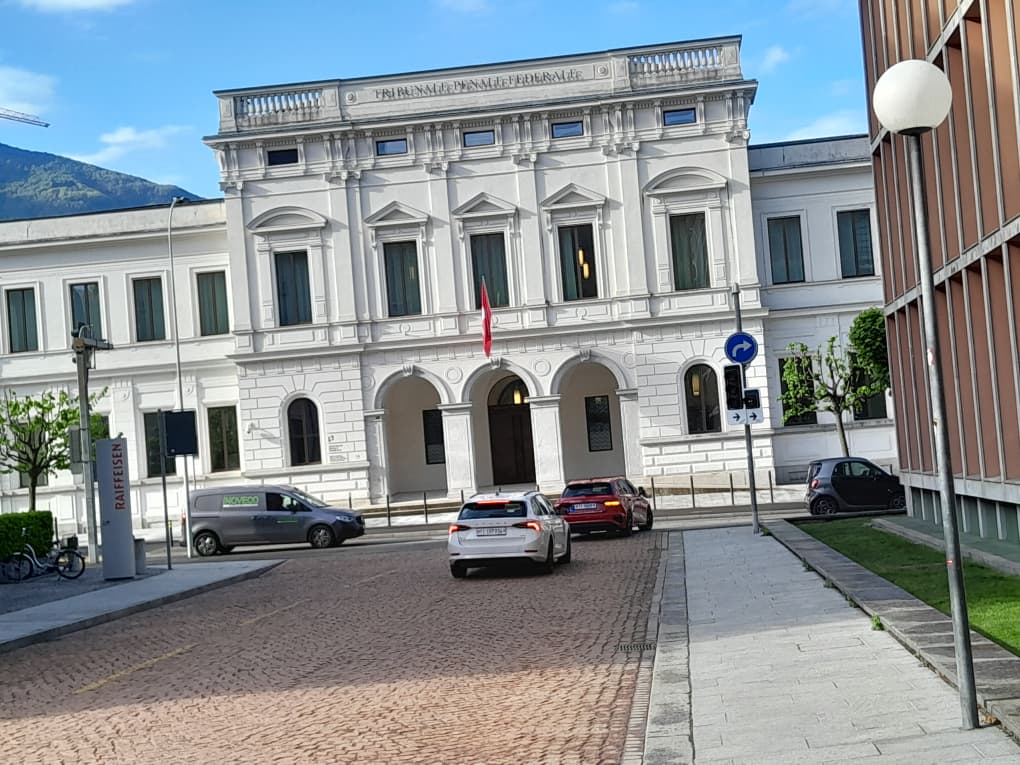
The Swiss Federal Court of Belinzona on May 15, 2024, handed him a 20-year prison sentence for crimes against humanity.
However, charges of rape and sexual violence were discontinued by the Swiss Federal Criminal Court in 2024, arguing that some alleged acts were time-barred and other isolated incidents that did not meet the threshold for crimes against humanity.
He appeared in a Swiss court on Monday, March 30th to appeal against his conviction.
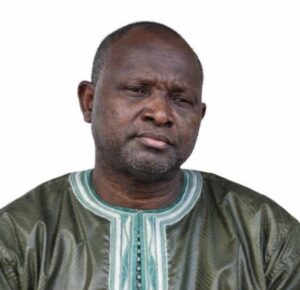
His lawyer argued that the Criminal Chamber has held that the facts presented against his client did not fall within Switzerland’s jurisdiction.
“You have rejected the applications submitted to you in the context of the preliminary questions… Ousman SONKO stands fully by the arguments set out in his preliminary questions and calls upon you to reconsider them, as their rejection clearly cannot be based on any convincing argument,” Phillippe Currat told the appeals court in Bellinzona.
He further argued that, for the sake of completeness, the court should note that it is difficult to understand how the multitude of rapes committed against a single person is supposed to serve as an effective means of supporting a policy of widespread or systematic attacks against the civilian population.
The prosecutor countered that, “the prosecution considers the calculation of frequency of sexual violence by the lower court as part of the systematic attack as incomplete.” She pointed to the question by the lower court as to whether sexual violence constituted a means of oppression.
In this context, she further argued that the lower court’s reasoning—that the lack of sufficient figures to qualify the scale of such a crime points to recording gaps in connection with sexual violence in Gambia—was flawed.
“Against that background alone, it does not seem appropriate to list individual known cases of sexual violence… and to deduce from this the absence of a frequency and/or a system,” the prosecution said.
Furthermore, the court’s attention was drawn to what she said were the Gambia’s Truth Reconciliation and Reparations Commission (TRRC)’s “more extensive statements” on the subject of sexual violence than can be determined from the lower court’s references.
Among other things, the TRRC emphasised, at a different point than referenced by the lower court, that widespread and systematic sexual violence was a characteristic of Yahya JAMMEH’s regime.
“In particular, at the NIA and the prisons, it was also a strategy of intimidation, oppression, punishment, and humiliation to use sexualized violence and torture against individuals in custody who were classified as regime opponents,” prosecution argued, adding that it was also part of the method (“organisational policy”) to strip male and female prisoners naked, especially political opponents.
“Such assessment and classification by the TRRC are directly aligned to the collective attack by the group of perpetrators in the present case… a higher number of unreported cases is because women are afraid to disclose themselves [as victims] on these issues,” prosecution stated.
Social and patriarchal structures in Gambia and the existence of a patriarchal social system only fueled such silence for decades.
Examples of sexual violence in general, and sexualised violence in the context of detention, correspond with the findings of the Office of the Attorney General in connection with the alleged matters.
In the acts to the detriment of one rape victim, the trial court decided that rapes were not part of the attack and denied the connection of commission.
Due to the inapplicability of crimes against humanity and a lack of Swiss criminal jurisdiction, it discontinued the proceedings regarding the entire indictment.
In the case of another rape victim, the lower court considered this rape as an isolated, singular act, and discontinued the proceedings on this point.
With regard to the electric shocks to the genitals of a third witness, the lower court concluded that although sexual integrity was affected, there were no indications of a sexual motivation on the part of the Junglers.
“The reasoning of the lower court is not convincing. The acts of rape and torture with electric shocks to the genitals always took place in ‘torture settings,’ but they were not used solely to make the victims compliant. Through sexual violence, the victims were deliberately inflicted with severe injuries to their intimate area, exposed and humiliated.
“The intention was not only to break them, but rather, to completely deprive them of their dignity as human beings. This was consciously accompanied by causing far-reaching consequential damage to the victims and to the ‘enemy’ (relatives, family, and civil population).
“Female victims could be impregnated or deprived of their fertility. Male victims deprived of their reproductive ability. Victims of sexual violence could become infected, fall ill, suffer from post-traumatic stress disorders or suicidal thoughts. They were often stigmatised afterwards and could lose all support and protection in the society.” Swiss prosecutor Sabrina Beyeler at the appeal hearing of former Gambian minister, Ousman Sonko’s crime against humanity conviction at the Federal Criminal Court of Switzerland, April 2026.
Prosecution said it is therefore possible, in such circumstances as in international case law, to conclude a real concurrence of torture and rape as also found in the common criminal law of Switzerland. Sexual offenses such as rape and sexual coercion are also in real concurrence with serious bodily harm.
Private prosecutor, lawyer Annina Mullis, in addition to the Federal Prosecutor’s Office, also highlighted several aspects of the subject of sexualised violence and rape based on the evidence submitted.
She maintained that sexualised violence was a common modus operandi within the JAMMEH regime, and the perpetrators could simultaneously rely on absolute impunity.
According to her, this impunity continues today in the underrepresentation of public testimonies regarding sexual and gender-based violence (SGBV) from 1994 to the end of 2016—and is also reflected in the resulting inadequate efforts to address the issue since 2017.
Lawyer Mullis referenced the Criminal Chamber’s examination of whether widespread use of sexual violence in The Gambia had been proven to such an extent that sexual violence during the period in question constituted, in and of itself, a widespread and/or systematic attack against the civilian population, as erroneous.
For example, the first-instance judgment states that the acts committed against her client lacked the element of repeated commission and thus the “collective character” because the TRRC final report mentions “only” about twelve individuals, with a temporal classification, who were raped or sexually assaulted by members of the security forces.
“Contrary to the findings of the lower court, however, Article of the Crimes Against Humanity does not require a state-sponsored pattern of conduct under which women were persecuted, tortured, and killed for the accused to be criminally liable,” she maintained.
The Office of the Attorney General also stated at the same hearing that the assessment of the overall offense does not depend on whether a specific catalog offense was committed repeatedly or systematically.
However, by requiring that multiple instances of similar (rape) offenses be proven, Mullis argued that the Criminal Chamber imposes “significantly higher standards” for establishing Sonko’s guilt in this case than in connection with other charged offenses.
“We therefore see here a case of unjustified unequal treatment: In cases of sexual violence against women (SGBV), the Criminal Chamber requires proof of a specific pattern of sexual violence—a standard that it has itself expressly rejected in the context of other offenses,” she told the appeal judges, describing it as a “fundamental misjudgment.”
She said the only decisive factor is whether they were embedded in such an attack. Even a single “act of a sexual nature” may fall within the scope of Articles of Crimes Against Humanity, provided there is a sufficient connection between the individual act and the general attack on the civilian population.
The Office of the Attorney General also correctly emphasised that not only other acts of sexual violence, but all of the acts of aggression listed by it must be included in the assessment.
In addition, the Criminal Chamber also failed to give due consideration to the findings in the case files regarding the widespread use of sexual violence within the power apparatus under Yahya JAMMEH.
Hence, she pleaded for Ousman Sonko to be found guilty, among other crimes, of violating sexual self-determination as a crime against humanity in “a particularly serious case” within the meaning of Articles of Crimes Against Humanity, in conjunction with those of the Swiss Criminal Code (StGB), to the detriment of her client, and therefore be punished appropriately.
About the Author
Sanna Camara is a Gambian journalist and media consultant with wide experience in transitional justice reporting. He is based in Banjul, The Gambia.