
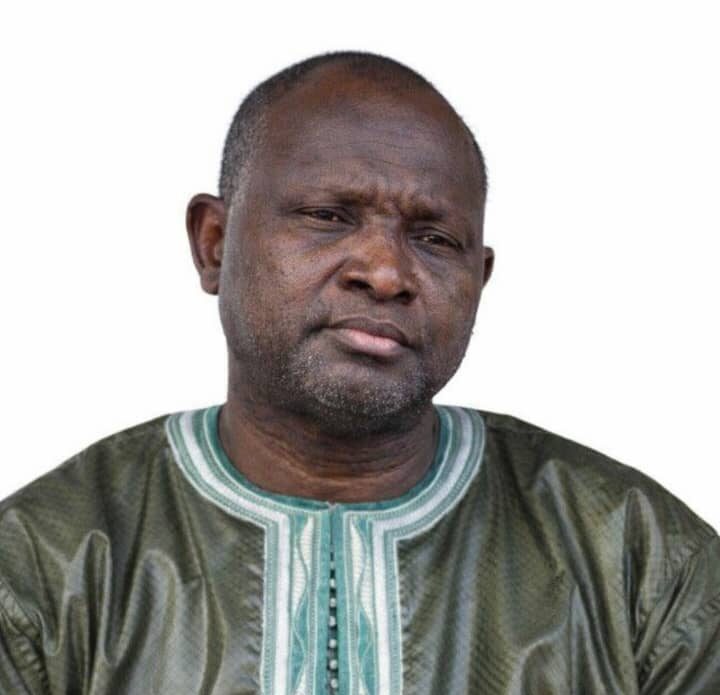

By Sanna Camara in Bellinzona
Mr Ousman Sonko, who served as State Guards’ Commander under Yahya Jammeh, as Inspector General of Police, and later as Interior Minister for a decade, now faces criminal accountability for crimes committed over 16 years—directly or indirectly.
If you know anything about Yahya Jammeh’s rule in The Gambia, you know this: elevation to such a high office required absolute loyalty.
Jammeh tested and retested his men before handing them command positions. Such posts were reserved for the most loyal—those utterly dedicated and willing to do whatever was asked.
Now, as lawyers argue Sonko’s innocence or guilt, they do so not from the perspective of the hundreds—if not more than a thousand—victims of Jammeh’s regime, but from points of law and legal service to their clients.
Many of those victims are also victims of Sonko. About a dozen appeared before the Federal Criminal Court in Bellinzona in 2024 as witnesses and private plaintiffs. In this appeal process, five are present in Bellinzona.
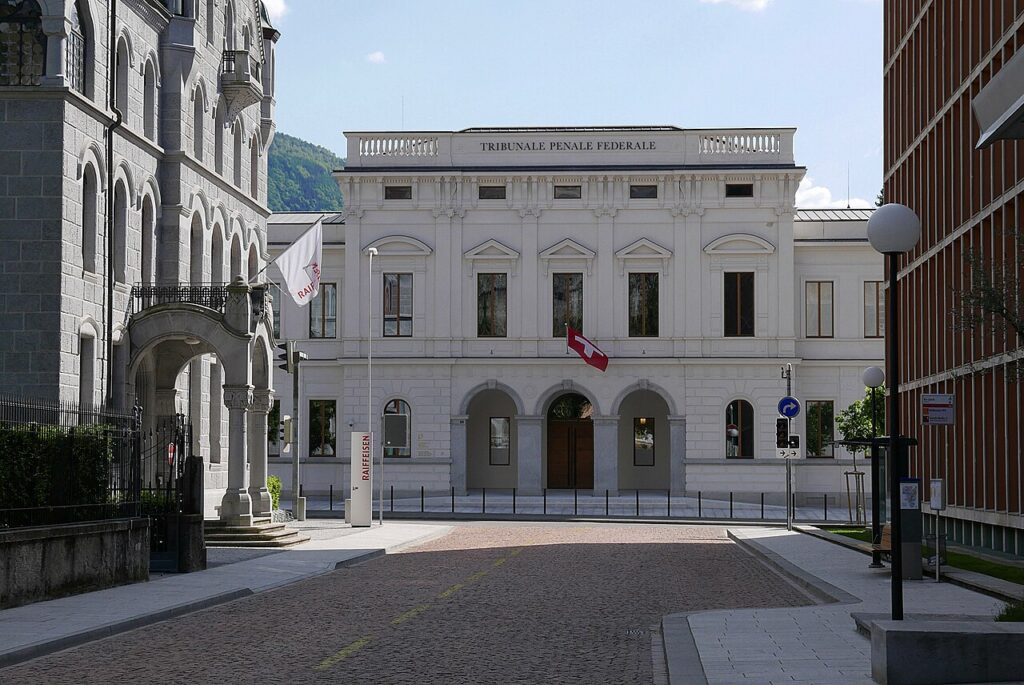
On Monday, March 30, the preliminary motion by Defence Counsel Phillip Currat dominated the day’s proceedings. Currat delivered a non-summarised, 100-page motion, arguing for the dismissal of both the prosecution’s and the victims’ lawyers’ appeals.
He cited procedural, technical and jurisdictional issues—much to the disappointment of over half a dozen law students who had traveled a hundred kilometers to witness this important case in international human rights law.
Instead, they left disappointed: the entire day was consumed by Sonko’s motion, leaving no time for other arguments.
Under Swiss criminal procedure, a lower federal appeals court can refer a matter to a higher court. That appears to be the case here, as Sonko’s lawyer insists on his client’s innocence regarding charges including murder, aggravated homicide and torture, among others.
These accusations involve the killing of Almamo Manneh and the rape of his widow between 2005 and 2006; the torture of Armed Forces members accused of plotting a coup in 2006; the killing of Baba Jobe in 2011; and multiple counts of aggravated deprivation of liberty, homicide, torture, rape and other sexual crimes.
Several plaintiffs have filed counter appeals in response to Sonko’s own, which his lawyer says was first filed on 2 June 2025.
They are:
- Binta Jamba (widow of Almamo Manneh)
- Ramzia Diab – former National Assembly Member (NAM)
- Bunja Darboe (army officer)
- Demba Dem (former NAM)
- Madi Ceesay (journalist, now a NAM)
- Musa Saidykhan (journalist)
- Fatou Camara (opposition activist)
- Fatoumata Jawara (former opposition activist, now a ruling Party NAM)
- Nogoi Njie (former opposition activist, now deceased and represented by her family), and
- Fatoumata Sandeng Darboe (daughter of slain activist Solo Sandeng)
Rather than a simple response, Sonko’s appeal was met with multiple counter appeals. His lawyer argues these have procedural flaws and should be rejected by the appeals court due to jurisdictional incompetence.
Rape as a Crime Against Humanity
One lawyer with a particular focus on justice for victims of rape and sexual violence is Annina Mullis, representing Musa Saidykhan, Madi Ceesay and Binta Jamba.
At trial, the judge found there was no documented evidence supporting allegations that Jammeh officials, including Sonko, engaged in repeated rape and sexual abuse. The judge ruled these acts were isolated, not systematic, and therefore did not constitute crimes against humanity.
“This line of reasoning must be deemed flawed,” Mullis told the appeals chamber earlier in the week, responding to Sonko’s preliminary motion.
She highlighted a contradiction: every motion for evidence filed by private plaintiffs—asking that female witnesses testify on sexual violence in The Gambia—was rejected. This, she argued, suggests a bias within the trial chamber toward dismissing sexual crimes against Sonko.
Mullis urged the court to allow her clients’ motion: to examine the facts in the interest of justice and fair play. The court granted this, deciding that rape as a crime against humanity will be considered in the appeal.
Questions Raised by Sonko’s Lawyer
Phillip Currat, Sonko’s defense lawyer, asked: how should the court proceed if Sonko never received a translation of the judgment by which he was convicted? Despite requesting a full translation from the court, none has been provided.
By order of 28 April 2025, the presiding judge rejected this request.
Now, Currat applies to the Higher Appeals Chamber to set aside that decision.
“He (Sonko) therefore requests that you order the discontinuance of proceedings in respect of the acts described in the indictment which are alleged to have taken place prior to 1 January 2011, namely the acts described in paragraph 1.5.1 concerning the death of Almamo MANNEH, 1.5.2 concerning the facts described by Binta JAMBA, 1.5.3 concerning the acts described by Bunja DARBOE, Ramzia DIAB, Demba DEM, Musa SAIDIKHAN and Madi CEESAY.” Phillip Currat – Lawyer for Ex-Gambian Minister.
Currat further requested that no investigative measures be carried out related to the amended indictment, and that the appeal hearing proceed based on the original indictment of 17 April 2023. Ultimately, he asked that the “amended” indictment be removed from the file—a request the court denied.
He challenges both the charges and the court’s jurisdiction, arguing that Switzerland has no authority to prosecute acts alleged to have occurred before 1 January 2011.
“In this case, Ousman SONKO will examine the elements of the case file and the evidence to demonstrate the extent to which they were unlawfully obtained and to request their removal from the case file,” he said.
“He will also reiterate some of his requests for evidence which were rejected by the presiding judge at the time in their order on evidentiary measures of 17 November 2025, but which remain relevant to his defence.”
After days of deliberation, the court, on Tuesday, 1 April 2026, dismissed Sonko’s appeals, allowing victims and the prosecution to proceed.
What’s at Stake
For Ousman Sonko, the choices are clear: he either pleads innocence, justifies the actions, or shifts blame to higher authorities—such as President Jammeh or the Junglers.
If convicted under Article 264a paragraph 1 (crimes against humanity), he faces a maximum of 20 years’ imprisonment. Under “aggravated” circumstances, the court could consider a life sentence, which in Switzerland still means 20 years behind bars for him.
Lawyers and advocates for victims of sexual violence see the case as vital for justice and legal precedent. As the trial judge stated, even a 20-year sentence may not reflect the severity of Sonko’s crimes.
If Sonko is acquitted or charges are dropped, the case moves to Switzerland’s Supreme Court.
Many analysts say that recognition of sexualised violence is essential, as it was central to the regime’s abuse. For the victims, this is a fight for justice—one that is about more than symbolism. It’s about closure, healing and accountability.
For now, these allegations follow Sonko wherever he goes. The victims’ quest for justice has proven relentless—whether in Switzerland, The Gambia, or beyond.
About the Author
Sanna Camara is a Gambian journalist and media consultant with wide experience in transitional justice reporting. He is based in Banjul, The Gambia