

By Biran Gaye
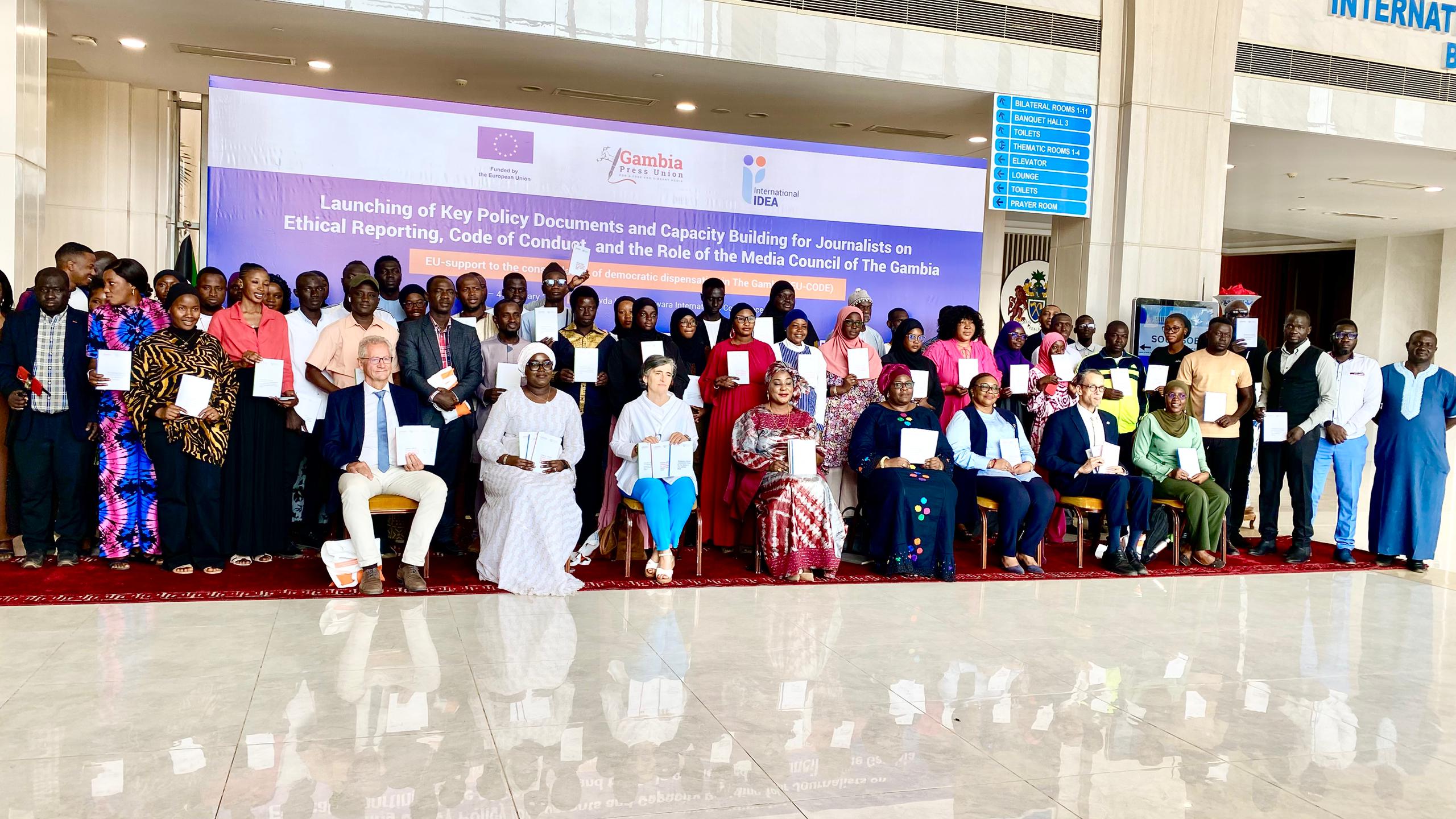
The Gambia Press Union on Tuesday, 3rd February 2026, introduced three landmark policy documents designed to raise ethical standards, strengthen accountability, and create safer workplaces for journalists nationwide.
The official launch, held at the Sir Dawda Kairaba Jawara International Conference Centre, also marked the wrap-up of the EU-backed CODE project, a multi-year effort to support democratic reforms in The Gambia.
“These documents are not just words—they’re a direct response to the challenges journalists face every day,” said Jainaba Faye, Head of Country Office for International IDEA, during her remarks at the event.
“Journalists are the watchdogs of democracy. Their work informs the public, shapes conversation, and holds power to account,” she continued.
The three new policies seek to fill key gaps in the country’s media sector. The Cherno Jallow Charter of Ethics for Journalists & Media Operators 2025 refreshes core journalistic principles and, for the first time, addresses issues like artificial intelligence, hate speech and misinformation.
The second policy, “Towards Effective Complaints Mechanisms 2025,” provides a practical framework for tracking media output and responding to ethical breaches.
The third policy sets out clear standards for preventing and reporting sexual harassment in newsrooms and media organizations.
“A safe workplace isn’t a luxury—it’s essential if we want creativity, diversity, and excellence in media,” Faye said.
With over 600 members, the Gambia Press Union is the country’s largest professional association for journalists. Its president, Isatou Keita, called on members to make the new documents a daily reference.
“If we follow everything in this charter, nobody will have reason to question the integrity of our work,” Keita said. “Let it become our Bible or Quran as journalists.”
European Union Ambassador Immaculada Rocá i Cortés highlighted the project’s focus on gender equality.
“Sexual harassment disproportionately affects women and blocks their full participation and leadership in media,” she said. “By tackling this issue head-on, we’re helping create space for dignity, equality, and greater empowerment of women journalists.”
The launch event featured an all-female head table—something several speakers noted is still uncommon in the industry.
Three consultants drafted the policies: Sang Mendy (ethics charter), Demba Kandeh (complaints mechanism), and Dr. Satang Nabaneh (harassment policy).
Journalists across the country will receive training sessions to ensure they understand and implement the new standards.
“As important as adoption is, it’s understanding and full implementation that will truly make a difference,” Faye said.
Earlier in 2024, the CODE project also released an Assault and Battery Guide for journalists, offering legal advice and practical safety tips.
Media organisations across The Gambia are now being encouraged to formally adopt and integrate these new policies into their operations.