
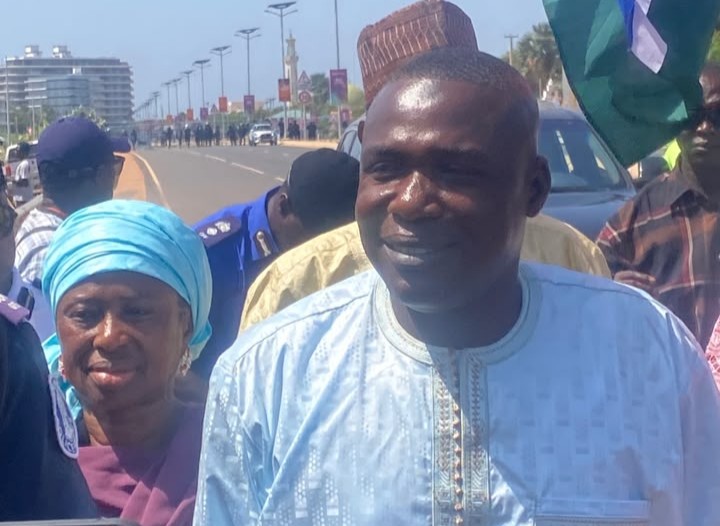

An expired ID is not the document you want making headlines when you’re running for president. Yet that’s what retired Major Alieu Sowe brought to the Independent Electoral Commission (IEC) as he submitted his nomination papers for The Gambia’s December 5, 2026 election.
Sowe insisted he is Gambian by birth and holds no other nationality. Asked about the expired card, he pointed to difficulties during his time in exile. His nomination remains pending for other reasons, too: the IEC said he still needed to provide the D1 million deposit, income tax clearance, a campaign itinerary and an approved campaign colour.
The Commission also asked him to correct documents that identified him by his military rank and named the Gambia Mbeh Killing Movement as his sponsoring organisation. Sowe, who is running as an independent, had submitted a birth certificate, educational certificates, a voter’s card, nomination forms, at least 5,000 supporters’ signatures, a sworn asset declaration and a manifesto.
He was undeterred by questions about his readiness. Leadership, he argued, should be judged by honesty and dignity, not material possessions. If elected, he promised to prioritise security, peace and livelihoods—and said that within 30 days, Gambians would be able to carry their valuables without fear of criminals.
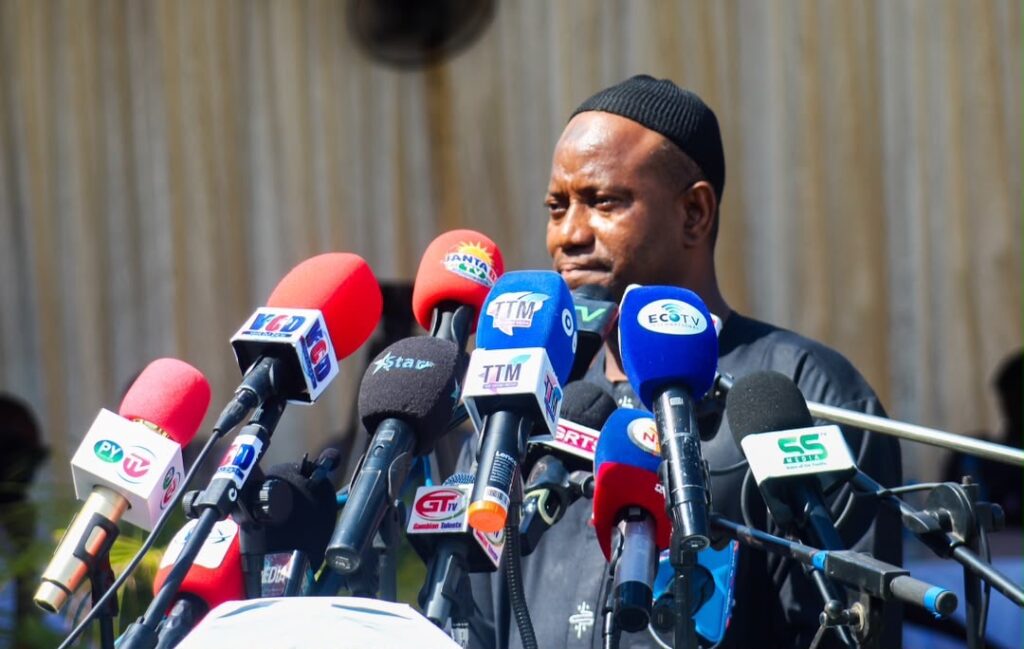
Sowe wasn’t the only aspirant to leave the IEC with questions hanging over his bid. Gambia Labour Party hopeful Bakusa Dukureh, 48, reportedly spent 26 years in the United States and holds both Gambian and American citizenship. Would he give up his American citizenship to pursue the presidency? His answer was emphatic: “I am not going to renounce my citizenship anytime, anywhere and anywhow soon.”
Dukureh paid the D1 million nomination deposit and chose black as his campaign colour, but several items were still outstanding. They included income tax clearance, a signed Code of Election Campaign Ethics, a party sponsorship letter, samples of his party colours and symbol, and original certificates. No party symbol was attached to his candidature.
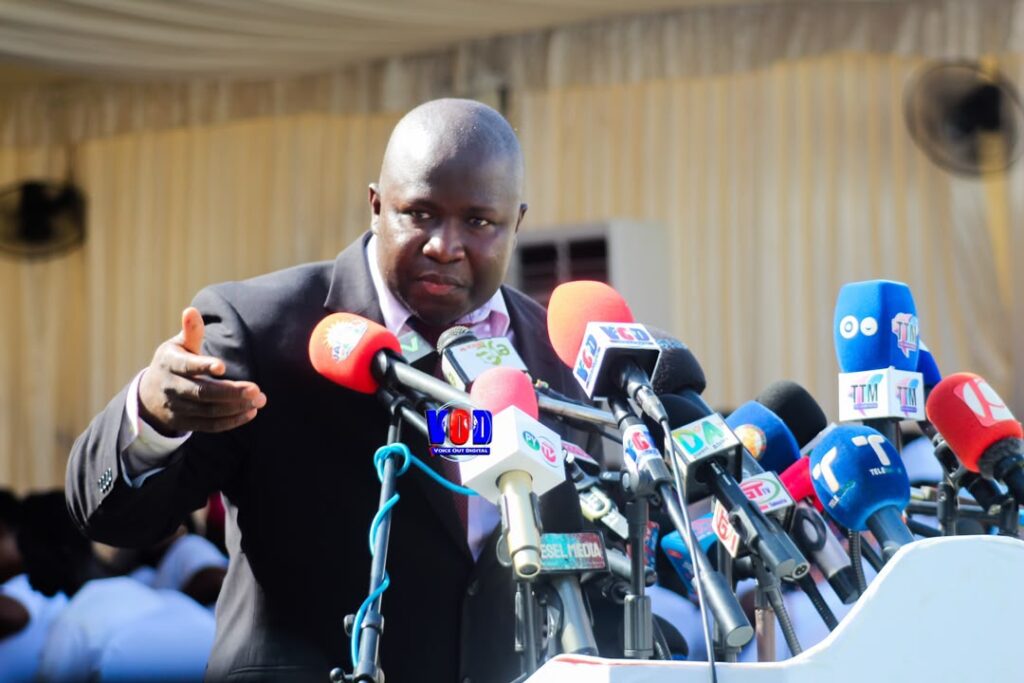
Then came National Builders Party leader Ansu Sanneh, 48, reportedly the first candidate to meet all the IEC’s nomination requirements since the process began. His party presented maroon and teal as its colours, the elephant and caterpillar as its symbols, and a 51-policy blueprint spanning education, healthcare, agriculture, infrastructure, anti-corruption and emergency services. Among its proposals: new airports and multiple ferry terminals.
But even Sanneh faced questions. Asked about the constitutional residency requirement, he offered his interpretation of it. He also confirmed that he had not yet registered as a voter. The interview ended before he could explain how he planned to obtain a voter’s card.
For now, the three aspirants have presented strikingly different pictures of readiness: one with an expired ID and a pending nomination, one refusing to renounce his American citizenship, and one reported to have completed the IEC checklist while still facing questions about voter registration. The Commission’s review continues ahead of December’s vote.