


By Lamin Sam Jaiteh
THE HAGUE, Jan 12 — The Gambia’s pursuit of justice for the Rohingya people reached a historic milestone on Monday, as the landmark genocide case it filed against Myanmar officially opened at the United Nations’ highest court.
This is the most important genocide trial the International Court of Justice (ICJ) has taken on in over ten years. The court’s decision will not only impact Myanmar, but could also shape future genocide cases worldwide—including South Africa’s recent case against Israel over the war in Gaza.

The Gambia, a small but resolute West African nation, has become a voice for the oppressed Rohingya—an ethnic Muslim minority in western Myanmar—by bringing this case forward in 2019.
Justice Minister and Attorney General, Dawda Jallow, sits at the heart of the proceedings in The Hague, standing beside attorney Arsalan Suleman as the hearings unfold.
Gambia’s action follows horrific events in 2017, when Myanmar’s military launched a brutal crackdown that drove over 730,000 Rohingya men, women, and children from their homes into neighbouring Bangladesh.
Survivors have shared harrowing accounts of killings, sexual violence, and villages burned to the ground. A United Nations investigation concluded that Myanmar’s military committed “genocidal acts” during this offensive.
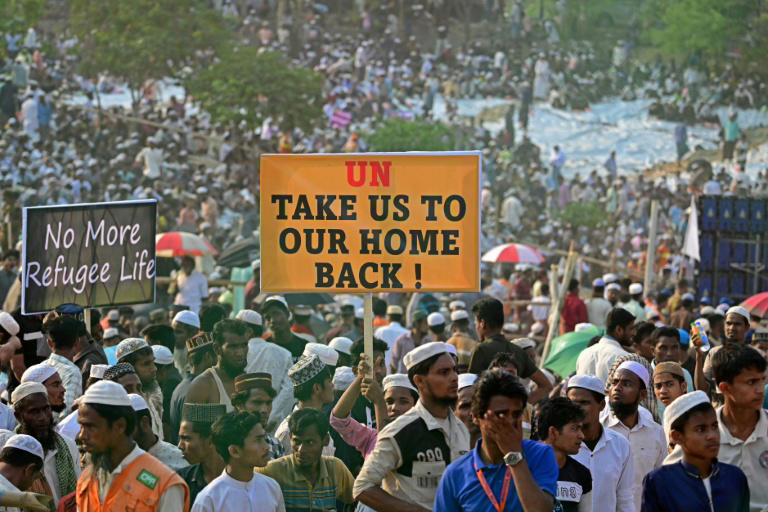
© Munir UZ ZAMAN
For many Rohingya refugees, these hearings represent a rare hope for justice and accountability.
“We are hoping for a positive result that will tell the world that Myanmar committed genocide, and we are the victims of that and we deserve justice,” said Yousuf Ali, a 52-year-old Rohingya refugee who survived torture by Myanmar’s military.
Myanmar’s authorities have consistently denied the genocide allegations, claiming that their military campaign was a lawful response to attacks by militants. Back in 2019, then-leader Aung San Suu Kyi dismissed The Gambia’s case as “incomplete and misleading” during initial hearings.
Now, for the very first time, Rohingya victims will be able to share their stories at an international court, though these sessions will be closed to protect their privacy and security.

© STR
The ICJ hearings are expected to last three weeks. As the U.N.’s highest court, the ICJ settles disputes between nations and can set global precedents for justice.
Meanwhile, Myanmar remains in crisis. Since the military seized power from the civilian government in 2021, the country has been rocked by violence, widespread protests, and a growing rebellion.
Recent elections in Myanmar have drawn sharp criticism from the United Nations, Western governments, and human rights organizations, who say the process is neither free nor fair.
The Gambia’s leadership in this case is a source of pride for many at home, showing that even a small nation can stand up for human rights and justice on the world stage.