

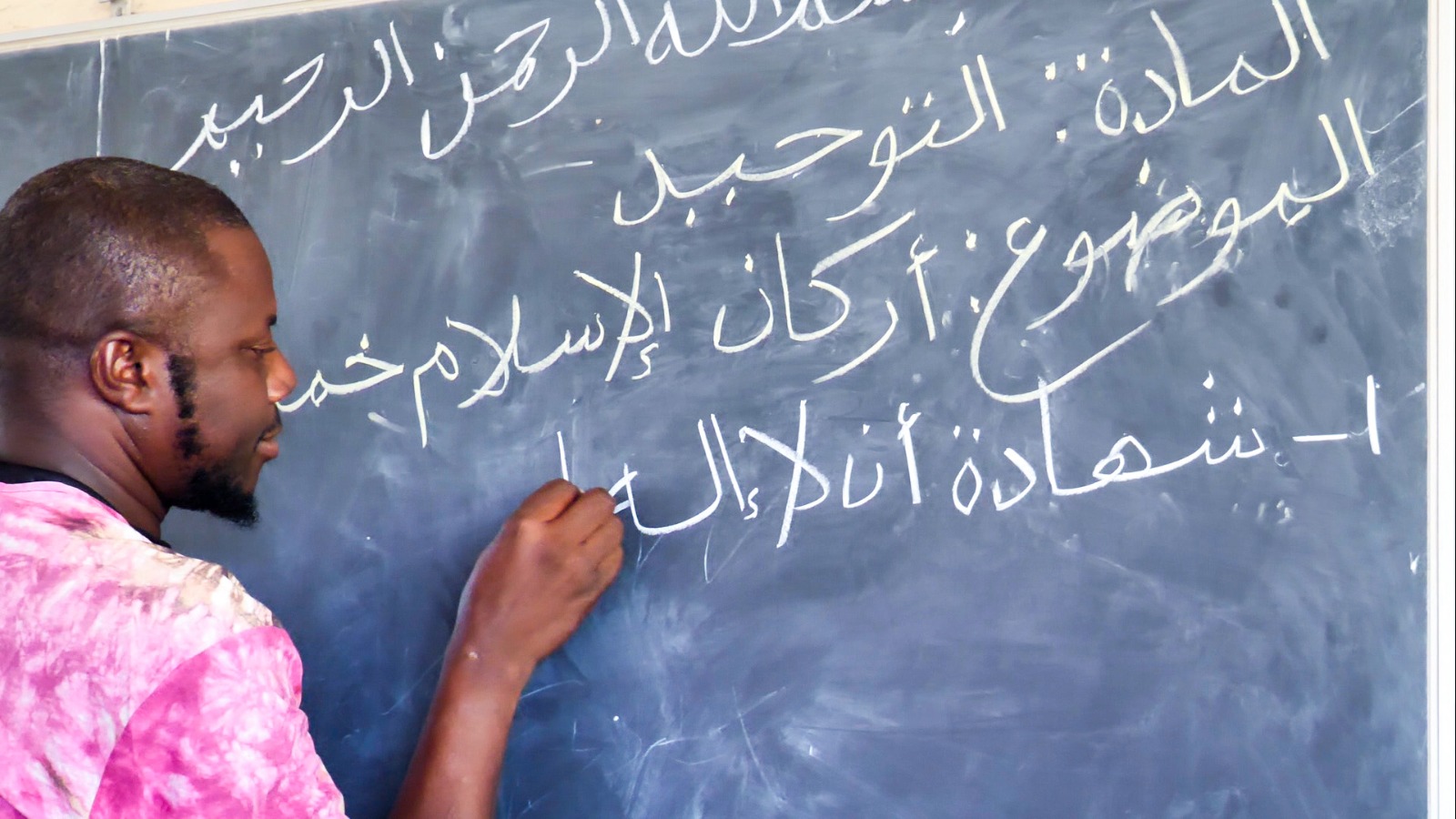
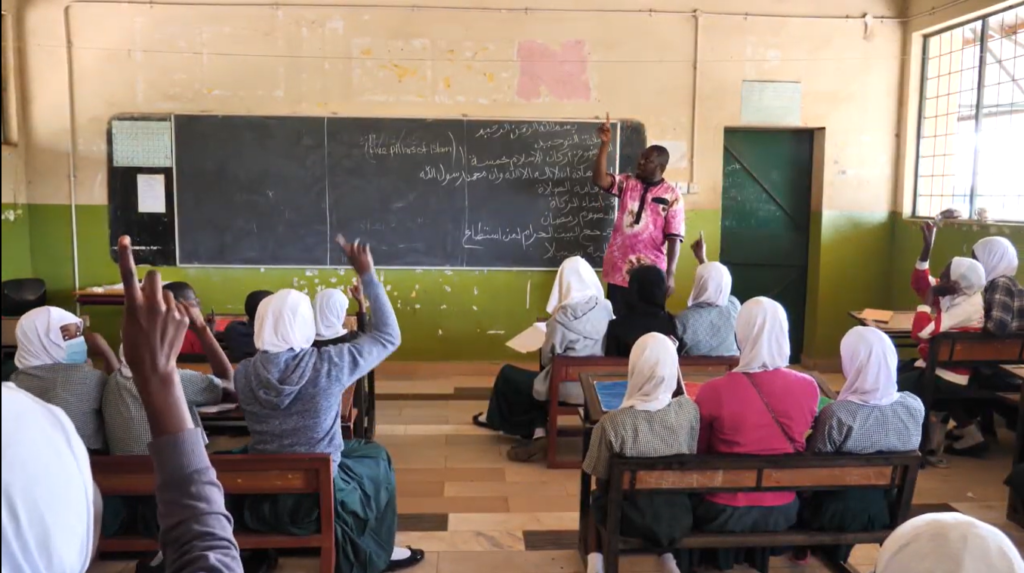
Abdul Qadir Drammeh stands at the front of his classroom, chalk in hand, guiding a group of eager children through the Arabic alphabet. The classroom is quiet—not just because the students are attentive, but because, for many, silence is a fact of life.
Abdul Qadir, 48, is The Gambia’s only deaf Arabic teacher, and his path here is a story of stubborn persistence, faith, and a refusal to let silence become a barrier.
His story is rooted not only in his own resilience, but also in the deep legacy of his family. Abdul Qadir’s father, the late Alhajie Banding Drammeh, was a prominent Islamic scholar and educator, widely respected for his contributions to spreading the teachings of Islam across The Gambia.
Through popular radio programmes and the establishment of schools, Alhajie Banding Drammeh became a household name—a figure whose dedication to education and faith set a standard that would quietly echo in his son’s journey.
Born in France but raised in The Gambia from the age of one and a half, Abdul Qadir lost his hearing at age two after a severe illness. “I was not born deaf,” he recalls.
“When I was two years old I got sick and lost my hearing.” As a child, he found himself the only deaf student in his Arabic primary school.
There were no sign language materials, no interpreters, and none of his teachers understood sign language. Instead, Abdul Qadir learned by copying whatever he could see written on the blackboard.
“When I didn’t understand a word, I’d ask my classmates to explain,” he says. “That’s how I improved my Arabic language skills.”
Those early years were marked by struggle. He remembers wrestling with “big and deep meaning words” in Arabic, unable to bridge the gap between himself and his teachers.
Sometimes, he’d find an interpreter to help explain difficult concepts. “Alhamdullilah, I sat the grade 12 exams and began writing letters on my own,” he says.
He began to communicate by writing, both in Arabic and English, and gradually, the language opened up to him—a door to a world that often seemed closed.
After school, Abdul Qadir’s journey took him to Libya, where he studied Information Technology for two years and worked at an Arabic school. He returned home to The Gambia and began teaching at Brikama Islamic Institute in 2004.
There, he was responsible for typing and printing all the examination papers, using his IT skills to support the school.
He has also worked as a volunteer with the Gambia Association for the Hard of Hearing (GADHOH), teaching the Arabic sign language alphabet—a challenge, since Arabic sign language is not widely developed outside Arab countries.
Today, Abdul Qadir teaches nursery and primary school pupils not just the Arabic alphabet, but also how to perform ablution, ritual prayers, and the basics of Islamic practice.
“I help them to read the Qur’an as well, which is difficult for the students,” he says.
“What I do is write it on the board for them to copy.” He adapts Arabic sign language symbols for his students, blending them with local gestures so deaf students in The Gambia can understand. Prayer, for deaf Muslims, can be a challenge. “Intention is the most fundamental thing,” Abdul Qadir emphasizes.

“Reading the Qur’an is difficult, but the most important is to have the intention.” Deaf students often pray behind hearing leaders, following as best they can.
Abdul Qadir himself has learned and understood much of the Qur’an, including Suratul Yassin, though he hasn’t fully memorised it. “Intention is one of the most important things,” he repeats.
His journey through higher education was just as challenging. At Amaana University in Manduar, where he earned his IT certification and Higher Teachers Certificate in Arabic, he was again the only deaf student.
Communication was via text messages with lecturers, and passing his diploma exams meant hours of independent research. “I advise a lot of deaf students on how to navigate academic life. Unfortunately, most don’t have the right tools to learn Arabic in sign language or about their religion.”
Abdul Qadir’s personal life is marked by resilience. He is married, and all six of his children are hearing. After his first wife passed away, he remarried and continues to teach his children sign language at home, so they can communicate—at least on a basic level.
The biggest challenge, he says, is still communication. “When I use sign language, people don’t understand,” he explains.
“I use text to communicate because most people I interact with don’t know how to interpret sign language.” Even among family and friends, the barrier can be isolating. “At times, I’ll be sitting amongst people chatting, but I can’t hear what they are saying, which makes life boring sometimes.” His wife is learning sign language and often helps bridge the gap at home.
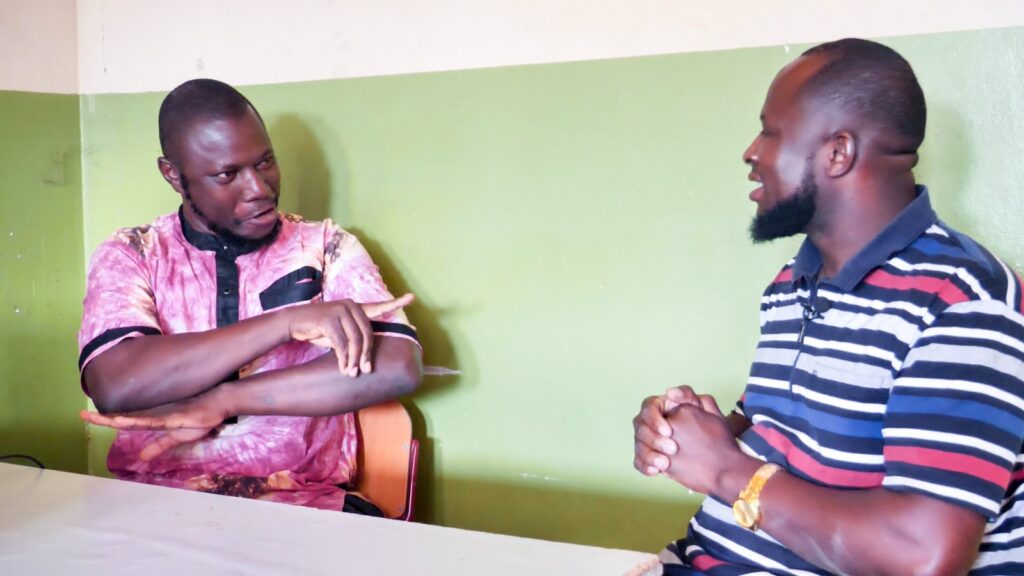
Yet, Abdul Qadir has built a tight circle of friends—mostly deaf—who visit him to chat in sign language and share tea (ataya). He wishes for a community where deaf people are better supported, especially in learning the Qur’an and Islamic practice.
“If there is one thing I can change right now, it is the attitude of so many deaf people in our community in terms of Islam,” he says.
“Most deaf people don’t learn the Qur’an, and most of them are adults. The reason is they don’t have anyone to help them communicate, and they don’t know what’s going on in our society.”
He has a message for parents of deaf children: “Bring your children to special schools to learn sign language, especially Arabic, which is very important. Learning how to pray is a huge challenge for most people within the deaf community. So I advise them to bring their children to us to learn how to pray.”
“When I was young – at the age of 9 years – I attended Arabic Primary School, and I saw how people wrote on the blackboard. When I didn’t understand a word, I’d ask my classmates to explain. That’s how I improved my Arabic language skills.”
Abdul Qadir Drammeh – The Gambia’s only deaf Quranic teacher.
His work extends to parents as well. Each September, he and his colleagues tour the West Coast Region, encouraging parents to send their children to special schools and teaching parents sign language, so they can communicate at home.
Despite the obstacles, Abdul Qadir finds profound fulfillment in his work. “I feel very happy in the morning coming to school. I am happy to meet the deaf children as well. When I come here, I can communicate with the children.”
He is proud to be a pioneer: “Throughout The Gambia, I am the only one who teaches Arabic using sign language. I think that is a good thing.”
As Abdul Qadir reflects on his journey, he’s clear about his mission. “My door is very open and I believe when my story is published it would create greater awareness within the community.”
For the deaf children of The Gambia, and for their parents, Abdul Qadir Drammeh is living proof that silence need not be a barrier to faith, knowledge, or community.