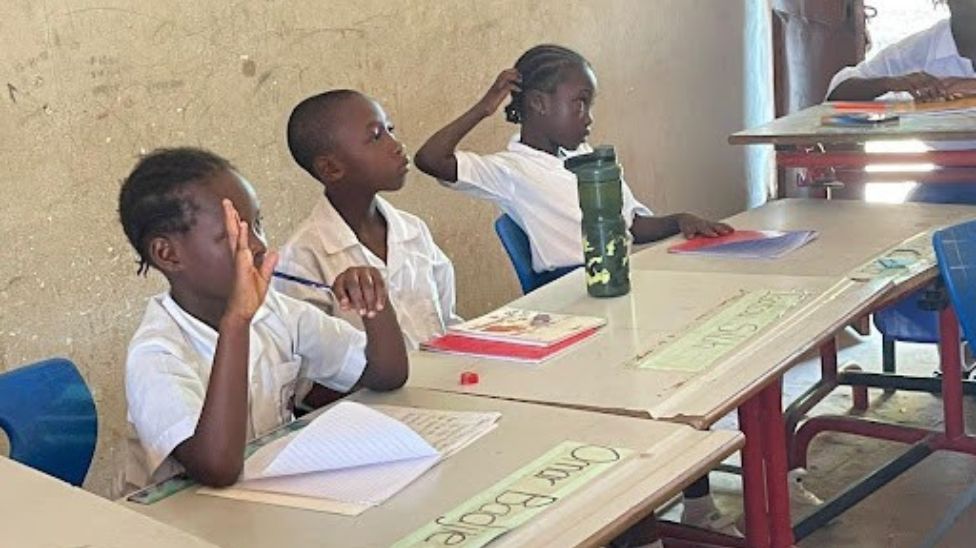

Before the first ‘Gele-gele’ (commuter van) rattles through Lamin’s busy streets, Marie Beyai has already begun her day with a silent plea: How will she find the 30 Dalasi fare to send her daughter to St. John’s School for the Deaf?
She’s one of thousands of Gambian parents facing the same question every single morning.
Marie’s 11-year-old is one of an estimated 39,000 people in The Gambia who are deaf or hard of hearing, that’s according to the last national disability survey conducted in 1998.
The Gambia hasn’t conducted a survey of its kind since, which reported a 1.6 per cent disability prevalence.
Later census data hinted at a slight decline—from 2.4 per cent in 2003 to 1.2 per cent in 2013—but the most recent 2023 figures are still pending.
Among children with disabilities, hearing difficulties were the most common type of disability. More than one-quarter (25.9 per cent) of children with disabilities had hearing challenges.
According to the Gambia Association of the Deaf and Hard of Hearing (GADHOH), only 3,500 (about 10 per cent) are registered with their organisation.
GADHOH aims to build a society where people with hearing disabilities enjoy full citizenship and equal rights.
They provide sign language training for parents, employers, and colleagues, and support nursery education for pre-school deaf children.
For families like Marie’s, education can seem like a distant dream, stalled by the daily grind of scraping together transport fare or braving streets where inclusion is more promise than reality.
“I want my child to learn and earn a livelihood, just like any other,” Marie explains, the fatigue and resolve clear in her voice.
“But so many parents like me just can’t keep up. Our children are already at a disadvantage—without proper transport, their right to education is even further out of reach.”
Learning to Connect—Against the Odds
It’s a story that repeats from Lamin village to Manjie Kunda.
When Ousainatou Jallow discovered her daughter Binta was losing her hearing, she described devastation giving way, slowly, to determination.
“She wasn’t born deaf. No one in our family has this condition. At first, I was in shock, but finally, we decided: we would support her however we could.”
That breakthrough came at the GADHOH Learning Centre in Kanifing, where both Ousainatou and her eldest, Aminata, learned sign language alongside Binta.
The result was more profound than just communication: “We can finally enjoy each other’s company,” Aminata says. Once, their house felt like a closed loop. Now, it rings with laughter and a new sense of belonging.
A Steep Climb for Inclusion
The government made bold commitments: The Persons with Disabilities Act, ratified in 2021, ensures equal access to inclusive, quality, and free education. Yet, for many families, this remains on paper, not practice.
Most mainstream schools lack interpreters, learning materials, and basic accessibility. Many teachers have no training in special needs education. The distance between law and daily life is measured in missed classes—and missed chances.
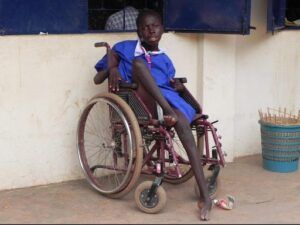
The numbers themselves feel stubborn. The last national disability survey, conducted in 1998, found 1.6 per cent of Gambians living with a disability, 5.4 per cent of them school-aged and hard of hearing.
The need has only grown. The Ministry of Basic and Secondary Education (MoBSE) operates three special schools, including St. John’s for the Deaf.
Still, most disabled children navigate mainstream classrooms built for anyone but them.
Beyond Good Intentions: Teachers on the Frontlines
For teachers like Mamie Mendy at St. John’s, inclusion is about more than ramps and rules. “Children with hearing or speech disabilities often find it hard to communicate with their peers,” she says. “Changing attitudes—building empathy—that’s what inclusion is all about.”
Mamie’s call is urgent: “We need awareness, more teacher training, and proper support services so that every child feels valued.”
“It’s Who I Am”: Deaf Identity in a Hearing World
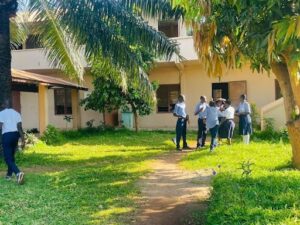
For Mariama Darbo, 15, a student at St. John’s School for the Deaf, her deafness is part of who she is. “I feel fine being deaf—it’s who I am,” she signs through an interpreter.
“At home, communication is easy because my whole family is deaf. But outside, people ignore us. We’re often the last to know about community events because no one thinks to include us.”
Her words reveal a deeper cost: the isolation, the constant reminder that society didn’t plan for kids like her. Even in moments of pride, there’s the ache of being left behind.
Paying for Understanding
Even for the few who make it to higher education, the path is fraught with new hurdles. Mariama Baldeh of GADHOH (Gambia Association of the Deaf and Hard of Hearing) had to pay interpreters out of pocket to continue her studies.
“How many deaf students can afford that?” she asks. “Policy says ‘Education for All,’ but [in practice], that promise has not reached us.”
Only a handful of deaf Gambians reach the General Certificate level, let alone university. “We’re not asking for pity,” says Lamin Ceesay, First Vice President of the Gambia Federation for the Disabled. “We are asking for opportunities.”
A System Strained, But Pushing Forward
GADHOH estimates 2% of Gambians are deaf, yet there’s just a single dedicated deaf school in the country, offering only primary and junior secondary classes.
At GADHOH’s learning centre, students pick up academic skills and practical trades, using whatever resources they can scrape together—visual aids, improvised teaching materials, Gambian sign language.
The organisation’s reach extends beyond training students to include parents, police, health workers—anyone who needs to bridge the gap between the hard-of-hearing community and wider society.
“The legal framework is there, but implementation is what counts,” says Ceesay. “Parents should not look down on their children. With encouragement and education, deaf children can do everything others can.”
Signs of Progress—And What’s Still Missing
Recent years have brought hopeful signs. More students with disabilities are enrolling and attending school, thanks to MoBSE’s work and its Special Needs Directorate.
Over 20 new polyglot teachers trained in sign language have been deployed across the country.
But even progress has its price. Teachers like Musa MS York, responsible for rural clusters, often travel daily – often by motorbike – to reach children most in need, sometimes paying for their own fuel and repairs. Discrimination, too, remains a hurdle.
“We need more sign language facilitators,” York says. “We can’t always be on site. Frequent training for mainstream teachers is essential, but opportunities are limited due to funding.
“We attend assemblies to sensitise other students about disability and inclusion. It’s important that every child is supported and not discriminated against.”
A Glimpse of Justice
For advocates, inclusion must be more than a word. It’s action—a school, a law, a trained teacher, an open mind.
As Lamin Ceesay says, “The issue isn’t ability—it’s opportunity. Give us access, and we will prove that disability is not inability.”
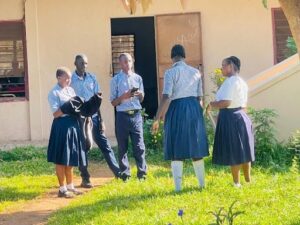
The challenges are daunting, but families like the Beyais and Jallows offer a living answer to despair, resilience, hope, and daily courage.
As public awareness grows—spurred on by new sign language interpreters on TV, pilot programmes for accessible news, and louder voices in government—a door cracks open.
The path forward demands more resources, more community education, better policies, and a shift in how we all see disability.
Gambia’s promise of education for all is not yet fulfilled. But for every child who steps into a classroom and knows they belong, for every family who finds their voice and fights for their rights, the future grows a little brighter.
“Inclusion is not a favour,” York says as he packs up for another village run. “It’s a right. Until every child can dream without barriers, our work isn’t done.”