

By Biran Gaye
Sand is piling up in the Gambia’s main shipping channel at a rate port officials say they’ve never seen before, threatening to choke off vital imports and send ripple effects through the country’s construction and manufacturing sectors.
What used to be a routine dredging job every two years has now become a high-stakes scramble every six months.
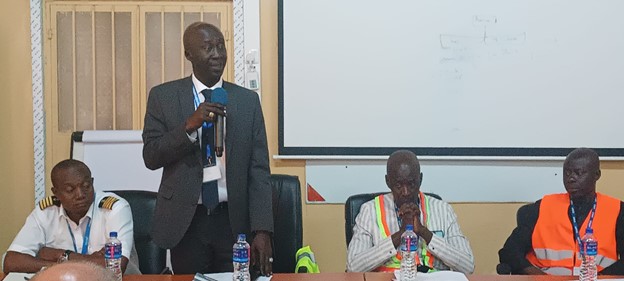
“We are obliged to deploy our own treasure to deepen the path, and then we will send the invoice to the concessionaire to reimburse the GPA,” Gambia Ports Authority Managing Director Ousman Jobarteh told the National Assembly’s Public Enterprise Committee on Thursday, February 5.
This escalation in sediment buildup isn’t just a technical headache—it’s already stifling the economy. Nearly two months ago (November – December 2025), an acute cement shortage brought construction sites to a standstill.
Since then, cement supplies have remained shaky, made worse by a government levy hike on land-imported cement and by the port’s inability to handle the new, larger ships that suppliers are now using.
Jah Oil, one of Gambia’s major cement importers, directly blames the port’s limited capacity.
“The urgent need for deeper channels stems from a major cement operator, Jah Cement, which is deploying larger vessels and now sources cement from Vietnam instead of Turkey and Egypt,” Jobarteh explained. “Because of the distance involved, it makes economic sense to buy in larger volumes, but only if the port can handle the ships.”
The port’s draft is supposed to be 9.3 meters, deep enough for these bigger vessels. But with accelerating sedimentation, that depth can no longer be guaranteed.
Every extra inch of sand means fewer ships can dock, slower unloading, and higher costs for everyone downstream.
Why is the river channel suddenly clogging so fast? Port officials suspect a mix of factors. Sand mining near Denton Bridge has ramped up, possibly accelerating sediment flows into the harbor.
“The impact of that sand mining might be the cause,” said Kulay Manneh, Director of Harbours & Marine Engineering. “Before, it took you two years, but now it’s every what? Six months.”
The removal of old ferry platforms—which once acted as makeshift sand barriers—has only worsened the buildup. Sand now collects where boats used to pass freely.
But the truth is: nobody knows for sure. The GPA admits that the rate and sources of sedimentation into the port have never been properly studied. “We need to do the survey and establish,” said Manneh.
The port authority is procuring new hydrographic equipment to finally collect baseline data.
In the meantime, the GPA is handling emergency jetty dredging itself, opting for a suction method that pumps sediment out to sea.
“Previous attempts to beach sand near the ferry terminal drew complaints from Half Die residents about dust pollution,” Jobarteh said.
With the port’s current dredger limited to 250 cubic meters per load, officials are shopping for equipment three to four times larger to keep up with the workload.
Separately, the government is negotiating a contract to dredge the stretch between buoys two and three off Cape Point—a crucial pinch point for incoming ships. That work is expected to be completed by mid-year.
The entire process is expensive, disruptive, and fraught with environmental concerns. But with the stakes rising—from cement shortages to port congestion—officials say there’s no choice but to act fast.
The GPA says it will push for environmental impact assessments on all shoreline activities, hoping to finally link policy to the health of the river and the port. “If you do any activity on the shoreline, naturally, it affects elsewhere,” Jobarteh said. “Those things also need to be established.”
For now, the port is left playing catch-up, trying to stay ahead of the sand while keeping Gambia’s supply chains moving. If the root causes aren’t addressed, emergency dredging—and the risk of economic gridlock—could become the new normal.