
By Muhammed MS’s Bah
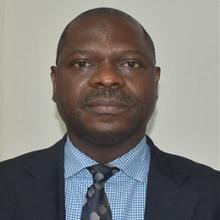
Finance and Economic Affairs Minister Seedy Keita has dismissed allegations of bribery, money laundering, and tax evasion linked to a $30 million petroleum scandal, saying they remain “not proven.”
Speaking at a press briefing held last Friday, Keita said the government’s response to parliament made clear that the inquiry could not establish substantial evidence to support the allegations.
“This was the conclusion of the inquiry; the four primary bases of the allegations were not found,” Keita told journalists. “The government acknowledges the conditional comments of the National Assembly, but the allegations could not be established.”
The press conference came in the aftermath of the arrest of 24 protesters, mainly youths, who demonstrated against the Public Utilities Regulatory Authority’s (PURA) newly introduced mandatory data price floor for GSM operators. Police responded by detaining 23 individuals, who have since been cautioned, charged, and placed under investigation.
After their arrest, rights groups quickly condemned the arrests. ARTICLE 19 urged the government to uphold the constitutional right to protest and to foster “an open, safe environment” for free expression and access to information. The National Human Rights Commission also called on security forces to act within the law and respect protesters’ rights when dispersing demonstrations.
In July 2025, lawmakers formally adopted a Joint Committee report that exposed governance failures, bribery, and tax evasion in the 2024 importation and sale of Russian oil. The report accused unlicensed companies, backed by illicit foreign bank accounts, of exploiting weak oversight from the Public Utilities Regulatory Authority (PURA), the Gambia Revenue Authority (GRA), and the Central Bank.
Civil society group Gambians Against Looted Assets (GALA) petitioned the government in July 2025, demanding swift action on the report’s findings, along with updates on corruption-related audits and the Acute Kidney Injury (AKI) panel investigations. In response, the government set up a high-level panel and assured it received the petition “in good faith.”

Keita insisted the government was not in confrontation with GALA but shared its goals of accountability. “The petition is not GALA versus government; it is a collective responsibility,” he said.
The Finance Minister outlined reforms since 2017, including the Anti-Corruption Act, the Access to Information Act, and a new State-Owned Enterprise Act. He cited improved rankings in Transparency International’s Corruption Perceptions Index, where The Gambia scored 38/100 in 2024, up from 30/100 in 2017.
Keita added that the GRA had imposed multi-million-dollar tax assessments on two non-compliant companies and initiated recovery measures. He also announced plans for a state-of-the-art petroleum testing laboratory to strengthen quality control and consumer protection.
Despite his assurances, critics argue the government is shielding officials implicated in the oil scandal. Protesters rallied in July demanding tougher action against corruption and accountability for senior officials reportedly named in the parliamentary report.