

By Muhammed MS’s Bah
For many Gambian households, the money sent home by relatives abroad is more than just cash; it’s a lifeline that keeps businesses running, children in school, and families fed. And this vital support is reflected in the country’s growing foreign exchange market.
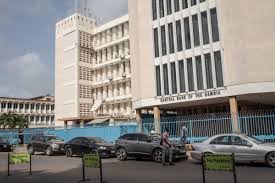
The Central Bank of The Gambia (CBG) revealed yesterday that total foreign currency trading reached US$1.3 billion in the first half of 2025, an 8.3 percent increase from the same period last year. Central Bank Governor Buah Saidy said this surge was mainly driven by private remittances, which totalled US$426 million from January to June 2025. “A rise in income from tourism also contributed to stronger foreign currency liquidity,” he added.
Despite the positive trend, the dalasi experienced modest depreciation in the second quarter: 0.8 percent against the US dollar, 7.6 percent against the Euro, 5 percent against the British pound, and 1.5 percent against the CFA franc. Governor Saidy assured, however, that the domestic foreign exchange market remains robust and well-functioning.
Remittances: The Lifeblood of the Gambian Economy
Gambia relies heavily on its diaspora, with remittances contributing hundreds of millions of dollars annually. The World Bank estimates that the country receives around US$700–800 million each year from Gambians living abroad. These funds are crucial in supporting household consumption, education, healthcare, and small businesses, directly strengthening domestic demand.
Inflation and Consumer Prices
The Central Bank of The Gambia also reported that food inflation rose to 8.5 percent in July, up from 7.9 percent in June, driven by higher global prices for vegetables, oil, and meat, along with seasonal pressures on perishables. Meanwhile, non-food inflation eased slightly to 6.1 percent, helped by stable transport and utility costs, while core inflation ticked up to 5.8 percent.
Governor Saidy described the uptick in July as a temporary deviation from the disinflation path, maintaining the forecast that headline inflation will converge towards 5 percent by the end of 2025, though global commodity volatility and domestic fiscal policy remain potential risks.
Steady Economic Growth
The Gambian economy continues to show strong momentum, recording 5.3 percent growth in 2024, fuelled by gains in financial services, trade, construction, and mining. Private remittances and public investment remain key drivers of domestic demand. The Central Bank’s Composite Index of Economic Activity grew by 6.2 percent in the first half of 2025, with real GDP projected to expand 6.4 percent for the full year.
Banking Sector Highlights
The banking sector remains solid, with total assets reaching D110.9 billion (64.3 percent of GDP) and customer deposits rising to D81.4 billion (41.9 percent of GDP). The non-performing loan ratio fell to 8.9 percent, reflecting ongoing loan restructuring and improved repayment conditions.
Following its 95th meeting on September 1–2, 2025, the Monetary Policy Committee (MPC) maintained the monetary policy rate at 17 percent, guided by global and domestic economic developments.
Global Economic Context
Governor Saidy noted that the IMF revised its global growth forecast to 3 percent in 2025, slightly below the pre-pandemic average. While inflation in advanced economies is broadly under control, developing countries, including The Gambia, still face pressures from energy costs, currency depreciation, and fiscal vulnerabilities.
For sub-Saharan Africa, inflation is expected to ease gradually to 7.5 percent in 2025 and 6.8 percent in 2026, reflecting a “steady disinflation path.” Commodity price volatility, trade tensions, and climate disruptions continue to challenge import-dependent Total activity volumes measured by aggregate purchases and sales of foreign currency amounted to US$1.3 billion in the first half of 2025, Central Bank Governor Buah Saidy disclosed yesterday.
He said this was 8.3 percent higher than what was recorded in the corresponding period a year ago. “This improvement was supported mainly by private remittance inflows amounting to US$426.0 million from January to June 2025. A rise in income from tourism was also a contributor to the improvement in foreign currency liquidity,” Governor Saidy added.
He stated that the domestic foreign exchange market continues to function smoothly with robust activity volumes. However, the exchange rate of the dalasi showed moderate depreciation in the second quarter of 2025. “The dalasi weakened by 0.8 percent against the US dollar, 7.6 percent against the Euro, 5.0 percent against the British pound, and 1.5 percent against the CFA franc,” he revealed.
Food inflation rises to 8.5 percent
The CBG further disclosed that food inflation has increased to 8.5 percent from 7.9 percent in June 2025, reflecting higher global vegetable, oil, and meat prices alongside seasonal pressures in perishables.
Non-food inflation slowed steadily to 6.1 percent in July from 6.3 percent in June 2025. This decline, according to Governor Buah Saidy, was aided by subdued global oil prices as well as stable domestic transport costs and utility tariffs.
In addition, core inflation edged up slightly to 5.8 percent in July from 5.3 percent in June 2025.
Governor Saidy further stated that his staff assessed the July uptick in inflation as a temporary deviation from the disinflation path and maintained the forecast that headline inflation will converge towards the 5 percent implicit target by year-end. “Nonetheless, this outlook remains subject to considerable risks emanating from the global economic environment, particularly the commodity price volatility and the domestic fiscal policy path,” he said.
State of the Gambian economy
The governor also stated that the Gambian economy maintained strong momentum, registering 5.3 percent growth in 2024. He said this performance was driven by gains in the financial services, trade, construction, and mining sectors. “Private remittance inflows and public investment also continue to support domestic demand. The growth outlook for 2025 remains robust, as reflected in the 6.2 percent average expansion of the Central Banks Composite Index of Economic Activity in the first half of the year. Moreover, staff projected a real GDP growth of 6.4 percent for 2025,” he added.
Banking sector development
Governor Saidy also stated that the Gambian banking sector has strong capital, liquidity, and profit levels. “Total industry assets expanded by 7.2 percent between March and June 2025, reaching D110.9 billion, equivalent to 64.3 percent of the GDP. Customer deposits also rose to D81.4 billion, or 41.9 percent of the GDP,” Governor Saidy added.
He said the banks’ non-performing loans declined to 8.9 percent in June 2025, supported by ongoing loan restructuring efforts and improved repayment conditions. economies, though softening energy prices offer some relief. Oil prices are projected at US$66.9 per barrel in 2025, down 15.5 percent year-on-year, reflecting weaker demand and rising supply.