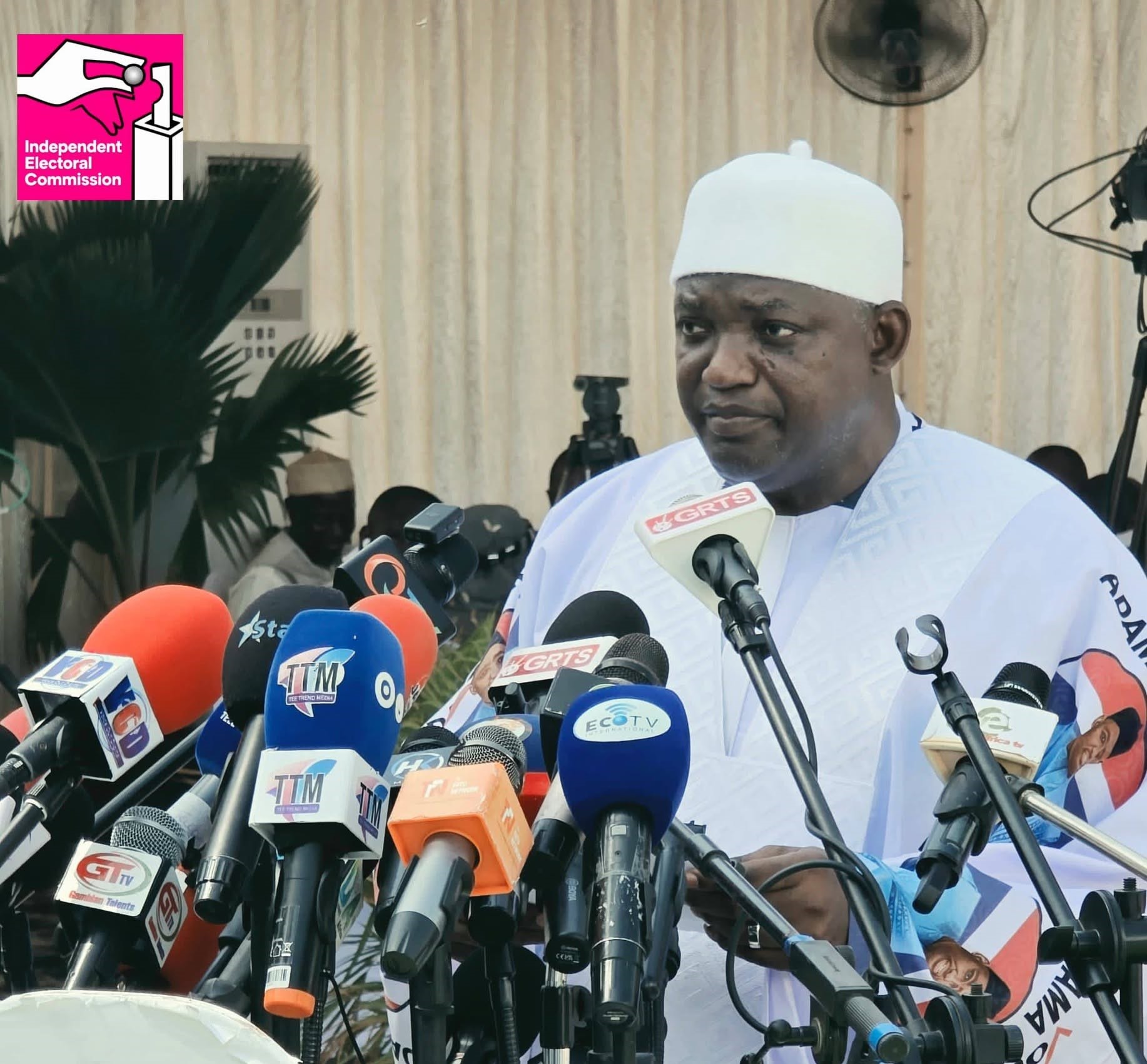

President Adama Barrow submitted his nomination papers at the Independent Electoral Commission’s Election House in Kanifing on Tuesday, November 10, entering the race for a third term ahead of The Gambia’s December 5 presidential election. Supporters accompanied him through the streets before he arrived at the commission.
For Barrow and his National People’s Party alliance, the procession was a public show of support. The filing itself was a more formal step: the IEC is receiving nomination papers from presidential hopefuls between November 3 and 14, then reviewing submissions before confirming who can appear on the ballot.
Barrow used the occasion to call for national unity and renewed an invitation to opposition leader Ousainou Darboe to join the ruling alliance. Darboe had submitted his own nomination papers the previous day, setting up a contest between two familiar figures in Gambian politics.
The president’s bid also brings a longstanding argument back into focus. Opponents criticise his decision to seek a third term, pointing to his earlier promise of a short transitional government. Barrow maintains that he has the constitutional right to run and argues that his government’s work on roads, electricity and public services merits another term.