
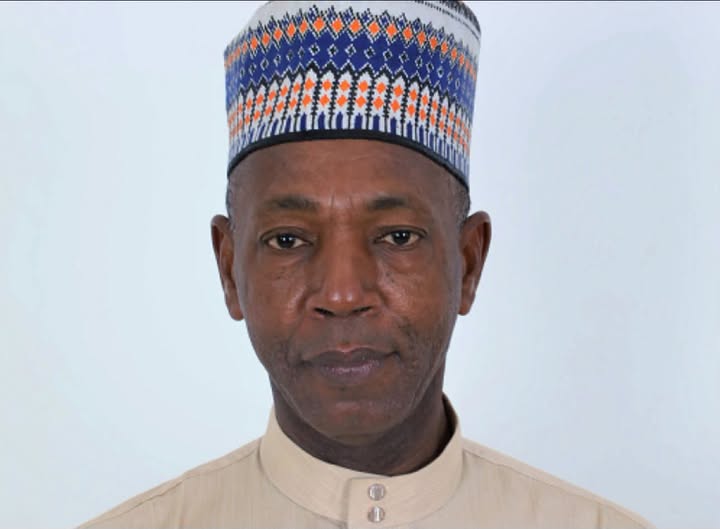

Remarks by Lands and Religious Affairs Minister Hamat Bah about foreigners and Gambians in the diaspora have triggered accusations of racism and xenophobia, dividing public opinion as political tensions rise ahead of the 2026 presidential election.
The controversy erupted after Bah addressed a rally held in Farafenni on Saturday 26th September 2026, in support of President Adama Barrow, where he spoke about the possible consequences of an opposition victory. His references to foreigners and Gambians living abroad quickly spread across social media, drawing condemnation from activists, opposition supporters and other citizens.
Much of the dispute centres on Bah’s suggestion that a change of government could allow Gambians in the diaspora to return and take jobs from people currently working in the country. He was also reported to have warned that a United Democratic Party government could dismiss civil servants and replace them with returnees.
Bah, the leader of the National Reconciliation Party and a key member of Barrow’s governing alliance, has emerged as one of the administration’s most outspoken campaigners. His supporters say the comments were part of a broader political argument about jobs, public appointments and what could happen if the opposition takes power.
His critics see something more troubling.
Civil-society activist Madi Jobarteh was among those who strongly condemned the remarks, accusing the minister of promoting racism and xenophobia. In a response circulated online under the headline “Hamat Bah Must Stop the Fearmongering and Xenophobia,” Jobarteh challenged Bah’s apparent attempt to decide who belongs in The Gambia and who has the right to participate in its affairs.
Jobarteh and other critics argue that Gambians do not lose their citizenship, identity or stake in the country simply because they live abroad. They say depicting diasporans as outsiders who may return to displace residents risks turning one group of Gambians against another.
The references to foreigners have drawn similar concern. Critics warn that careless political rhetoric can foster hostility toward foreign residents, including people from neighbouring West African countries who have lived, worked and raised families in The Gambia for years.
Some commentators such as Musa Bassadi Jawara described Bah’s language as “scapegoating” for the high cost of living and huge national debt, arguing that it is not governance. ” This is gutter politics at its worst, and it is dangerous for Gambia”, he said.
For critics, the issue is not whether Bah has the right to criticise the opposition. It is whether a senior government official should frame an election as a contest between Gambians at home, citizens abroad and foreign residents.
President Barrow’s campaign team – Barrow 2026 – has distanced him from Mr. Bah’s remarks. In a response to the UDP campaign secretary’s remarks, the team argued that it is “unfair to turn the remarks of one political figure into the position of an entire government.”
Bah’s defenders reject the accusations. They say his remarks have been selectively quoted, stripped of context and recast by political opponents seeking to damage both him and President Barrow.
According to that interpretation, Bah was warning civil servants about the employment consequences of a UDP victory rather than attacking anyone because of race or nationality. His supporters maintain that discussing possible changes in government appointments is legitimate during an election campaign, even if the language used was blunt.
Others have cautioned against branding the minister racist or xenophobic without considering his full speech and its political context. They view the backlash as another example of partisan divisions shaping how public statements are interpreted.
That defence has done little to quiet the debate.
Opponents say Bah’s position as minister makes his choice of words particularly consequential. His portfolio covers lands, regional government and religious affairs—areas closely connected to residency, community relations and public trust. A statement from someone holding that office, they argue, carries the authority of the state even when delivered from a campaign platform.
The controversy has also revived scrutiny of Bah’s previous political rhetoric. He has faced criticism in the past over comments touching on ethnicity and political identity, leaving opponents to argue that the latest episode is part of a pattern rather than an isolated lapse.
Beyond Bah himself, the dispute has exposed a deeper tension in Gambian society: the sometimes uneasy relationship between people living at home and the country’s large diaspora.
Gambians abroad provide vital financial support to relatives and contribute to political advocacy, civic initiatives and national debate. Many remain closely involved in events at home despite living overseas for years or even decades.
Yet diasporans are sometimes portrayed as disconnected from daily realities inside the country. Returnees may also be viewed as people who arrive with money, influence and expectations of receiving senior positions. Those perceptions have made the diaspora both an important political constituency and an easy campaign target.
The dispute over foreigners carries its own risks. The Gambia has deep social, cultural and economic ties with neighbouring countries. Communities across the region share languages, ethnic identities and family relationships that often predate modern borders.
In that setting, critics argue, politicians must distinguish legitimate discussions about immigration and employment from rhetoric that casts foreigners as a collective threat. Failure to do so can encourage resentment against people who may have no role in the political contest.
The uproar has therefore become about more than one speech at one rally. It has raised broader questions about who gets to define Gambian identity, whether residence determines belonging and how far politicians should go when trying to mobilise their supporters.
For Bah’s critics, the answer is straightforward: citizenship and participation cannot depend on where a Gambian lives, while foreign residents should not be used as convenient targets in an election campaign.
For his defenders, the controversy reflects an increasingly hostile political environment in which strong campaign warnings are quickly labelled hateful or discriminatory. They say Bah was contrasting the Barrow administration with the opposition, not drawing racial boundaries around the nation.
As campaigning intensifies ahead of the 2026 election, the episode offers a warning to political leaders across the divide. Words spoken before a partisan crowd no longer remain at the rally. They move rapidly through radio, television, online news platforms and WhatsApp groups, often reaching far larger audiences without the context in which they were delivered.
Bah may have intended to strengthen support for Barrow by warning voters about an opposition victory. Instead, his remarks have opened a national argument about political responsibility, citizenship and belonging.
That debate is unlikely to disappear quickly. At a time when parties are competing fiercely for every vote, the controversy shows how easily campaign rhetoric can deepen existing divisions—and how difficult it can be to repair the damage once those words leave the podium.