

By Lamin Sam Jaiteh
A critical look at how forms of popular music can meaningfully contribute to movements seeking social or political change.
Throughout history, music has not just entertained—it has inspired, united, and, at times, terrified those in power. From the streets of Lagos to the boulevards of London, and right here in Banjul and Dakar, popular music has often been the pulse of protest and the heartbeat of movements seeking social and political change.
The Power of the Beat
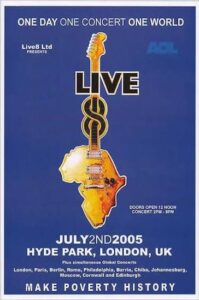
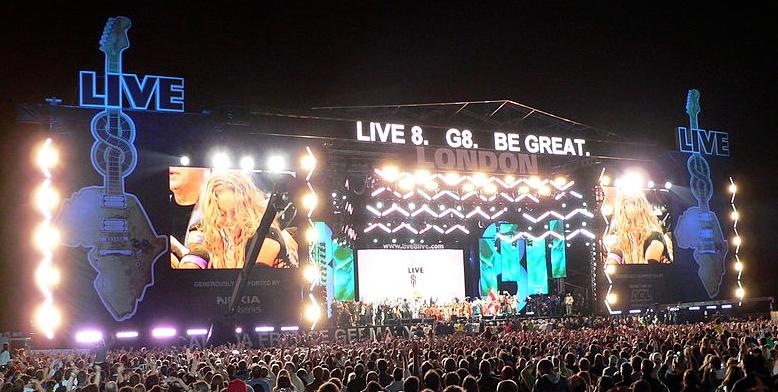
Music’s role in activism isn’t new. Songs and performances have long functioned as tools for raising awareness, rallying people, and even directly challenging authority. In July 2005, the world saw a striking example with the Live 8 concerts. Global stars—from U2 to Youssou N’Dour—came together on massive stages, not merely for entertainment, but to demand debt relief for Africa’s poorest nations. The concerts drew millions, both on site and via television, making poverty and inequality impossible for world leaders to ignore. While some questioned whether a concert could really count as political action, Live 8’s organisers argued that mass participation—whether on the street or in front of a stage—can still pressure the powerful and spark debate.
Music and the Public Sphere
The link between music and activism is rooted in broader ideas about the “public sphere”—the space where citizens come together to discuss, protest, and push for change. German philosopher Jürgen Habermas saw the public sphere as vital for democracy. Later thinkers, like Nancy Fraser, argued that concerts and music events can create their own “counterpublics”—spaces for voices too often excluded from mainstream debate.
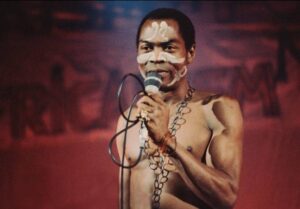
Few genres illustrate music’s radical potential better than Afrobeat, pioneered by Fela Kuti in 1970s Nigeria. In a country flush with oil money but riddled with corruption and dictatorship, Fela’s songs became anthems of resistance. His Kalakuta Republic compound was more than a home—it was a safe space for activists, a stage for dissent, and a thorn in the side of military rulers. Tracks like “Zombie,” “Sorrow, Tears and Blood,” and “ITT” ridiculed generals and exposed abuse. When his records were banned from the radio, Fela took the fight to the stage, his Afrobeat performances becoming rallies for change. While the government tried to silence him, his music gave ordinary Nigerians a voice and a sense of power.
In The Gambia, music has similarly fueled movements for justice. Killa Ace, arguably Gambia’s most influential rap activist, has built his career on confronting injustice and speaking uncomfortable truths. His lyrics tackle everything from government corruption to police brutality, and his visibility brought him into direct conflict with authorities during the dying days of the Jammeh regime and beyond. Tracks like “Ku Boka C Geta G” and “Gambia” became anthems of defiance for a new generation demanding accountability and reform.
The beat of protest continues today. Afro-Manding artist Dodou Manneh, better known as Nyancho (Apachaky), shook up the nation with his 2026 single “Wulolu” (“Liars” in Mandinka), an unflinching condemnation of corruption. The song, and its follow-up “Duwolu,” resonated so deeply with Gambians that they quickly became rallying cries for anti-corruption campaigners, and sparked debate from street corners to social media.
Across the border in Senegal, music has long been at the heart of political life. During the 2011-2012 protests, the hip-hop collective Y’en a Marre (“Fed Up”) used rap to mobilise young Senegalese against constitutional manipulation and bad governance. Their songs and activism played a crucial role in galvanising the youth vote and unseating President Abdoulaye Wade. More recently, in the tense political climate leading up to 2024, artists like Keyti and Fou Malade have continued this tradition, using their platforms to call for peace, transparency, and a respect for democratic norms.
The Double-Edged Sword of Popular Music
Of course, music’s political power is not always on the side of the people. In Nigeria, while Afrobeat railed against dictators, other genres like Juju (a style of Yoruba popular music) were sometimes used to flatter and reinforce the status quo. Governments and powerful interests have often tried to co-opt music, turning it to propaganda or using censorship to silence critical voices.
Yet, even when repressed, the urge to create and resist through music persists. Afrobeat’s coded language, its embrace of Pidgin English, and its energetic dance styles all helped it slip past censors and reach the streets. In The Gambia and Senegal, artists have used language, metaphor, and social media to keep their messages alive even when official channels are closed.
More Than Just a Soundtrack
In a nutshell, popular music is more than just background noise—it’s a form of public action. It creates communities, sparks debate, and sometimes even changes the course of history. Whether it’s Fela’s Afrobeat, Killa Ace’s fearless rap, Nyancho’s Mandinka protest songs, or the hip-hop anthems of Senegal’s Y’en a Marre, music has proven time and again to be a vital tool in the struggle for justice, freedom, and dignity.
Music alone may not topple governments or eradicate corruption. But it offers a rallying point, a language of resistance, and a space where new futures can be imagined—and sometimes, brought to life.